🏛 General Information: Dolmabahçe Palace
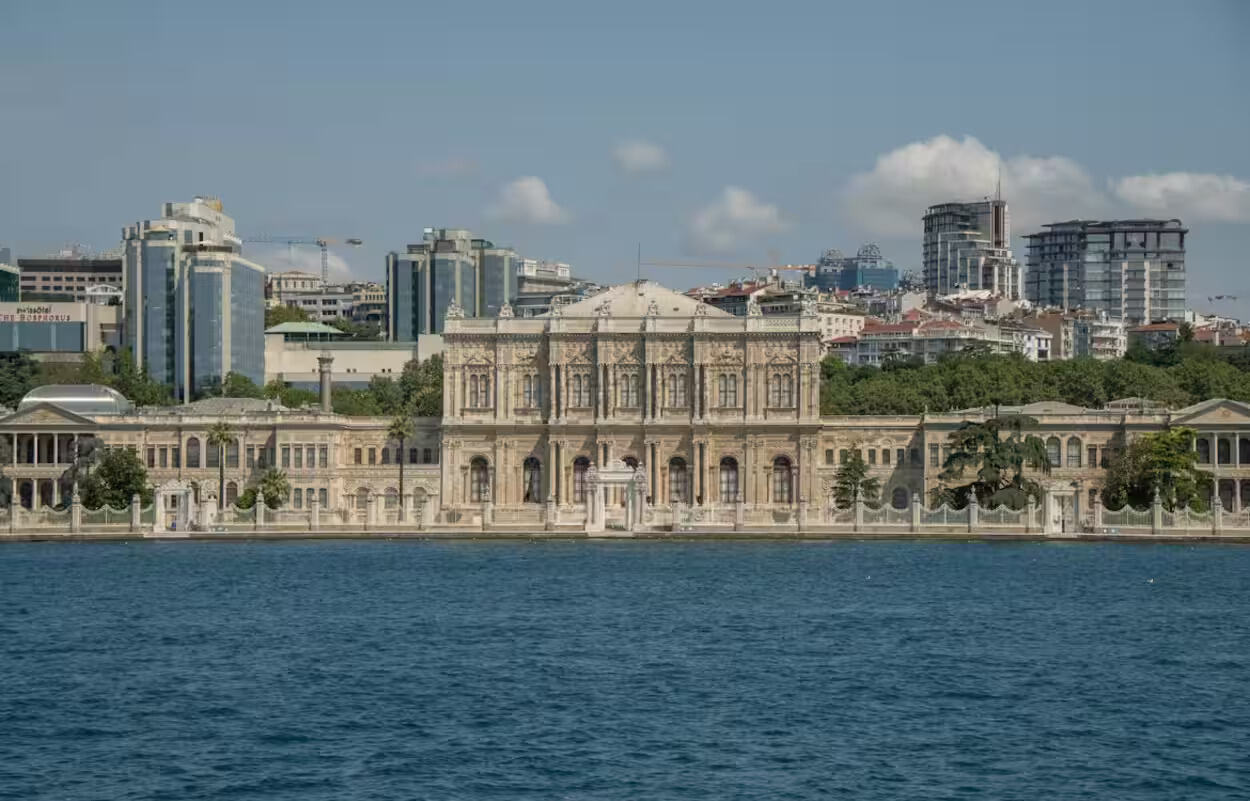
- Location: Beşiktaş district, Istanbul, on the European shore of the Bosphorus, positioned between Kabataş and Beşiktaş waterfront areas.
- Construction Period: 1843 – 1856.
- Commissioned by: Sultan Abdülmecid I of the Ottoman Empire as part of major modernization reforms known as the Tanzimat Era.
- Architects: Garabet Balyan, Nigoğayos Balyan, and British architect James William Smith.
- Purpose: Built to symbolize the political transformation of the Ottoman Empire and to serve as a modern imperial residence replacing Topkapı Palace, reflecting European court culture and diplomatic prestige.
- Meaning of the Name: “Dolmabahçe” translates as “Filled Garden,” referring to the reclaimed bay area that was filled during the Ottoman period and transformed into imperial gardens.
🏗️ Architectural Features
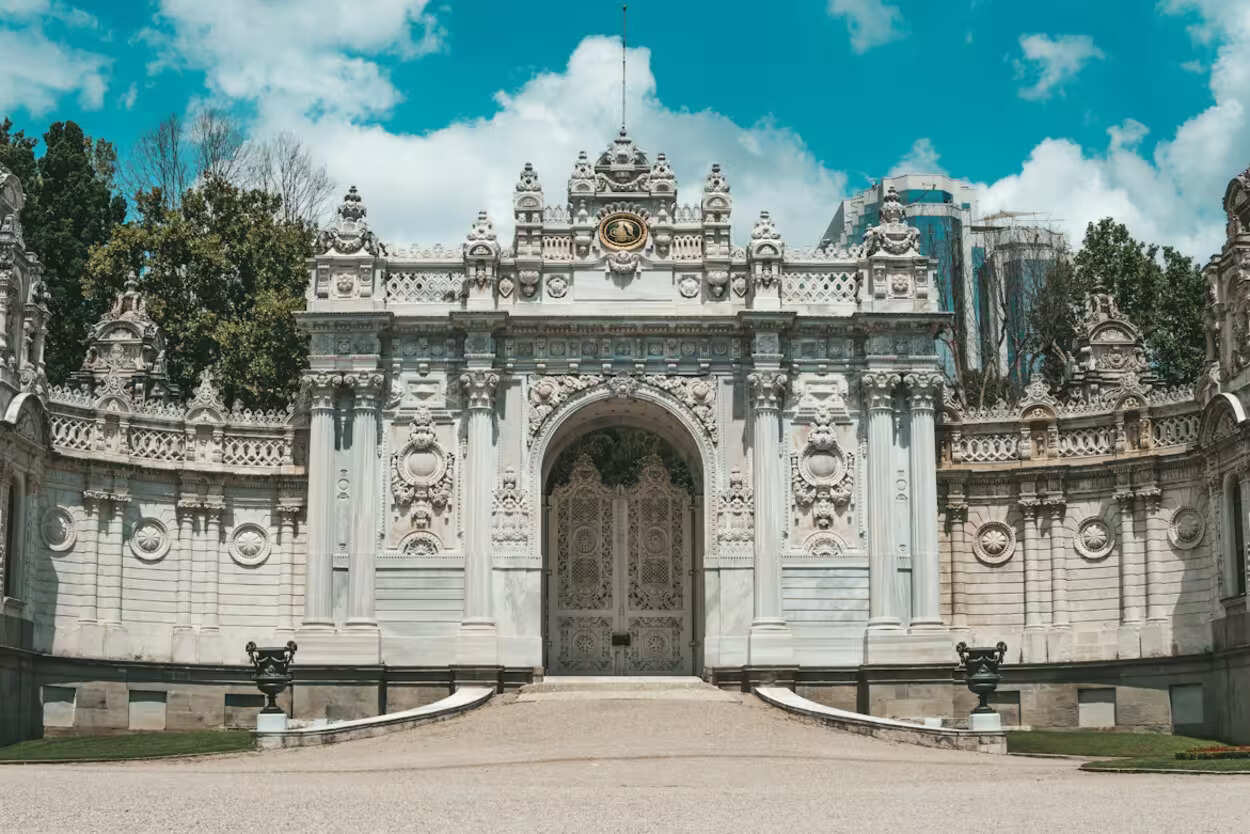
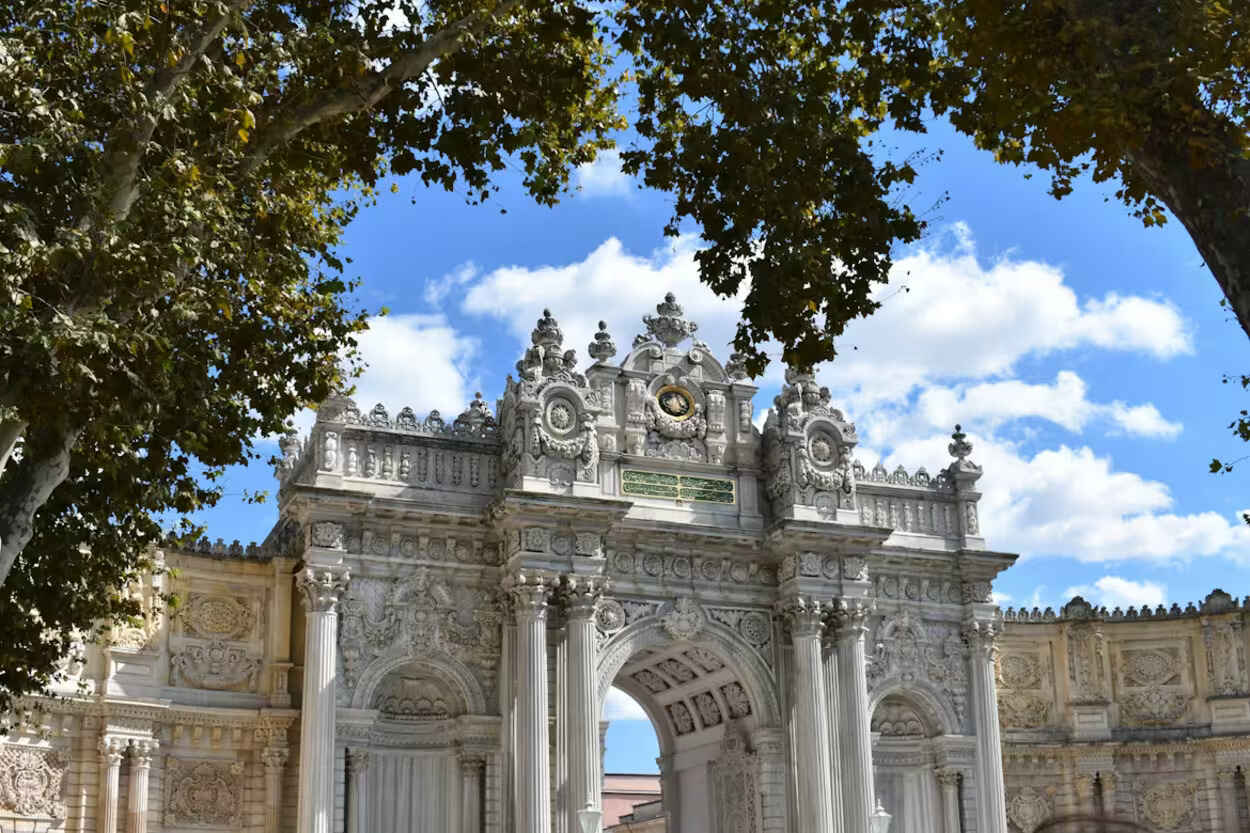
- Architectural Style: A sophisticated fusion of Baroque, Rococo, Neoclassical, and traditional Ottoman architectural elements, representing Western influence blended with imperial Ottoman aesthetics.
- Scale: The palace complex contains 285 rooms, 46 grand halls, 6 Turkish baths (hamams), and 68 toilets, making it one of the largest palaces ever constructed in the Ottoman Empire.
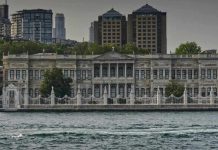
- Structure: Built along a 600-meter Bosphorus shoreline façade, the palace emphasizes symmetry, monumental entrances, and ceremonial axial planning inspired by European royal residences.
- Materials: Marble from Marmara Island, Egyptian alabaster, and European crystal were extensively used throughout interiors and façades.
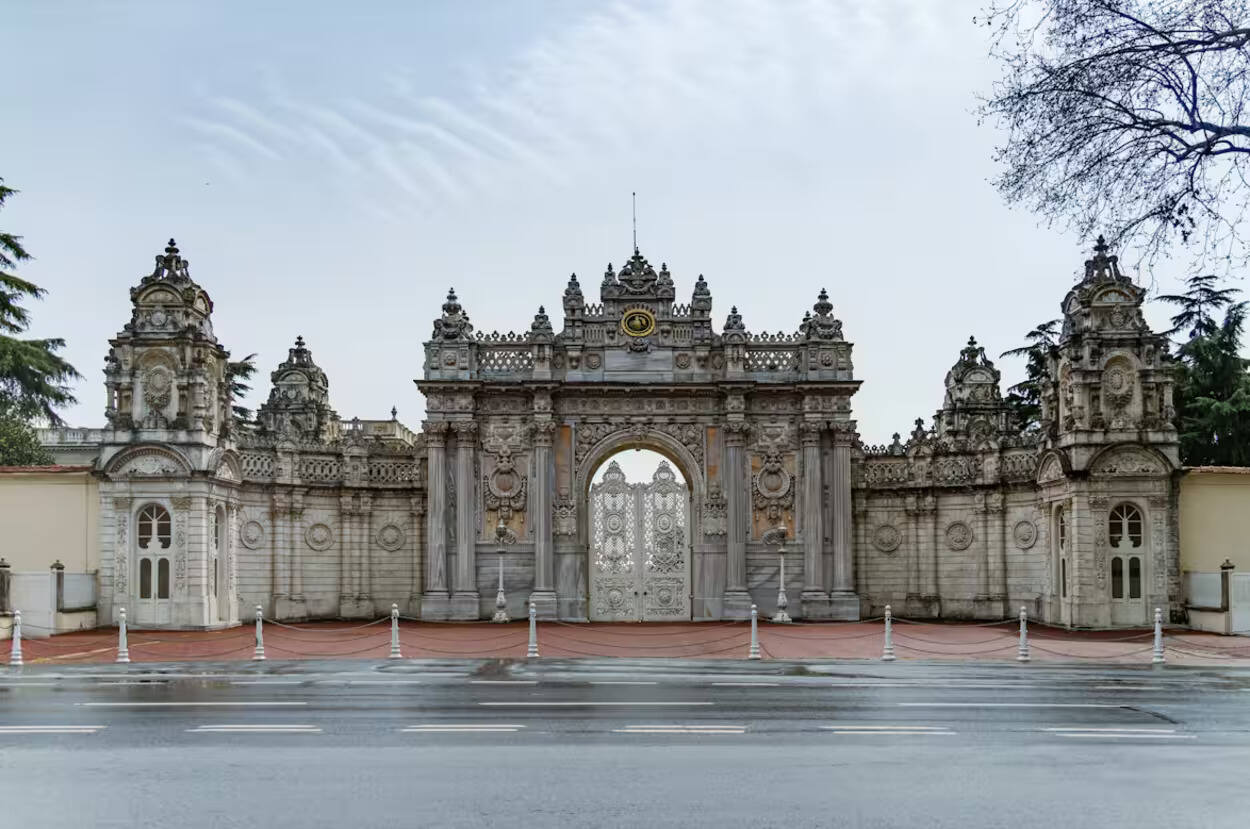
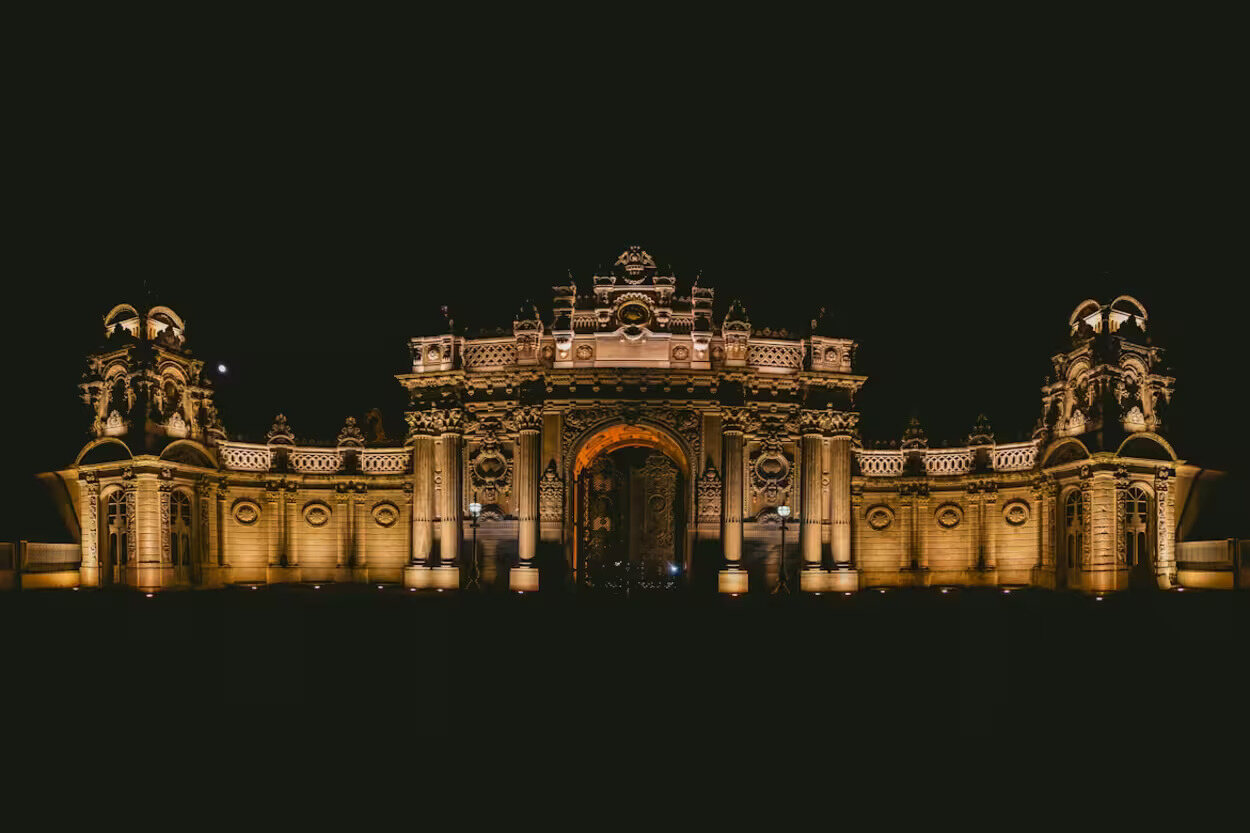
- Gardens: Carefully landscaped gardens feature decorative pools, ornate gates, sculptures, and sea-facing promenades designed for imperial ceremonies and receptions.
- Notable Halls:
- Ceremonial Hall (Muayede Hall): Spanning approximately 2,000 m², crowned by a 36-meter-high dome and illuminated by a massive 4.5-ton Bohemian crystal chandelier gifted by Queen Victoria.
- Crystal Staircase: A double horseshoe staircase decorated with Baccarat crystal balustrades, brass railings, and luxurious carpets.
- Blue Hall & Pink Hall: Used for diplomatic receptions and royal audiences, reflecting refined Ottoman court culture.
🌟 Historical Importance
- Dolmabahçe Palace functioned as the administrative and ceremonial center of the Ottoman Empire during its final century.
- Six Ottoman sultans resided in the palace, beginning with Sultan Abdülmecid I and continuing until Sultan Mehmed VI.
- The palace hosted foreign ambassadors, royal delegations, and major diplomatic negotiations reflecting the empire’s engagement with Europe.
- After the abolition of the Ottoman Sultanate in 1924, the complex transitioned into state property and was preserved as a national heritage site.
- Mustafa Kemal Atatürk, founder of the Republic of Turkey, used Dolmabahçe Palace as his Istanbul residence and passed away here on November 10, 1938. The clocks inside the palace famously remain set to 09:05 in remembrance.
🎨 Art and Collections
- The palace interiors display extraordinary luxury through European furniture, silk curtains, handmade carpets, gilded ceilings, and elaborate wall decorations.
- More than 14 tons of gold leaf were reportedly used in ceiling ornamentation and decorative details throughout the building.
- Dolmabahçe houses some of the world’s largest and finest Hereke silk and wool carpets produced exclusively for the Ottoman court.
- The palace art collection includes over 600 paintings featuring European masters, Ottoman court painters, landscapes, and portraits of sultans.
- Crystal chandeliers, French clocks, Venetian mirrors, and porcelain pieces highlight the empire’s strong artistic exchange with Europe during the 19th century.
👁️ Visitor Experience
- Visitors explore the Selamlık (State Apartments), representing official government functions and ceremonial spaces.
- The Harem Section reveals private royal life, including living quarters of the sultan’s family and attendants.
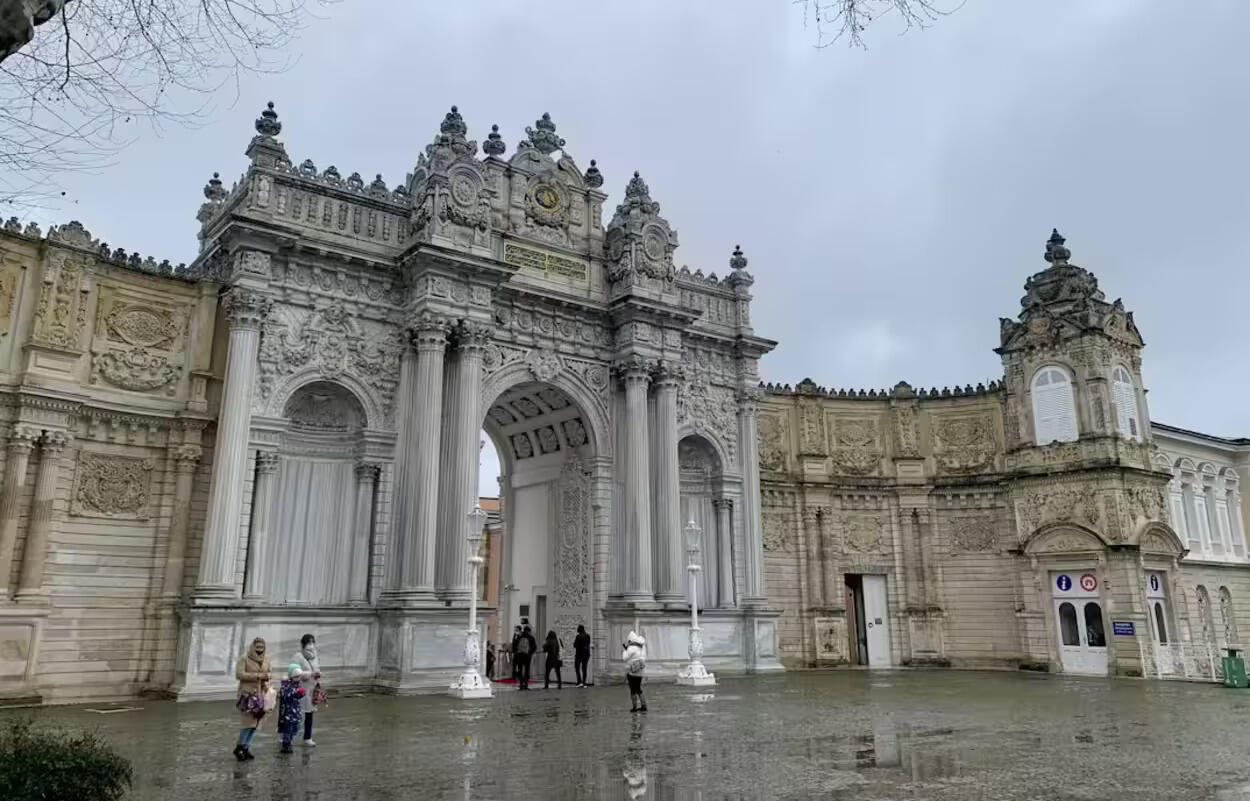
- Sea-facing gardens allow visitors to walk along the Bosphorus while viewing ornate imperial gates such as the Treasury Gate and Sultan’s Gate.
- Audio guides and guided tours are available in multiple languages, providing historical context and architectural explanations.
- Photography is restricted inside many halls to protect historic interiors and artworks.
- Early morning visits are recommended to avoid crowds, especially during peak tourist seasons.
📌 In Summary
Dolmabahçe Palace represents one of the most remarkable architectural and political transformations in Ottoman history. Combining European elegance with Ottoman imperial tradition, the palace symbolizes modernization, diplomacy, and cultural exchange during the 19th century. Its grand halls, artistic treasures, and Bosphorus setting make it one of Istanbul’s most prestigious landmarks.
Beyond its architectural splendor, the palace carries profound national significance as the place where Mustafa Kemal Atatürk spent his final days. Today, Dolmabahçe Palace functions not only as a museum but also as a living monument reflecting the transition from empire to republic, attracting millions of visitors each year who seek to understand Istanbul’s layered historical identity.
Dolmabahçe Palace Visiting Hours & Ticket Prices (2025)
| Section | Visiting Hours | Closed On | Adult Price | Student / Discounted Price | Free Entry |
|---|---|---|---|---|---|
| Palace + Harem | 09:00 – 16:00 (last entry 15:00) | Monday & Thursday | 450 TL | 250 TL | Under 6 years old |
| Palace Only | 09:00 – 16:00 (last entry 15:00) | Monday & Thursday | 350 TL | 200 TL | Under 6 years old |
| Harem Section | 09:00 – 15:00 | Monday & Thursday | 150 TL | 100 TL | Under 6 years old |