General Information : Yerebatan Sarnıcı
The Basilica Cistern stands as one of the most remarkable surviving structures of Byzantine Constantinople. Hidden beneath the bustling streets of modern Istanbul, it reflects the advanced urban planning and engineering vision of the 6th century. Built to secure a reliable water supply for the imperial capital, the cistern symbolized both technological mastery and imperial power. Its strategic location close to major religious and administrative centers demonstrates how infrastructure and governance were closely connected in Byzantine society.
- Location: Southwest of Sultanahmet Square, near Hagia Sophia, Istanbul.
- Construction Date: Built in 532 AD during the reign of Byzantine Emperor Justinian I.
- Purpose: Constructed as a massive underground water reservoir to supply Constantinople’s water needs.
- Name: Called “Yerebatan” in Turkish, meaning “submerged” or “sunken” due to its forest of columns; known in the West as the Basilica Cistern.
Architectural Features
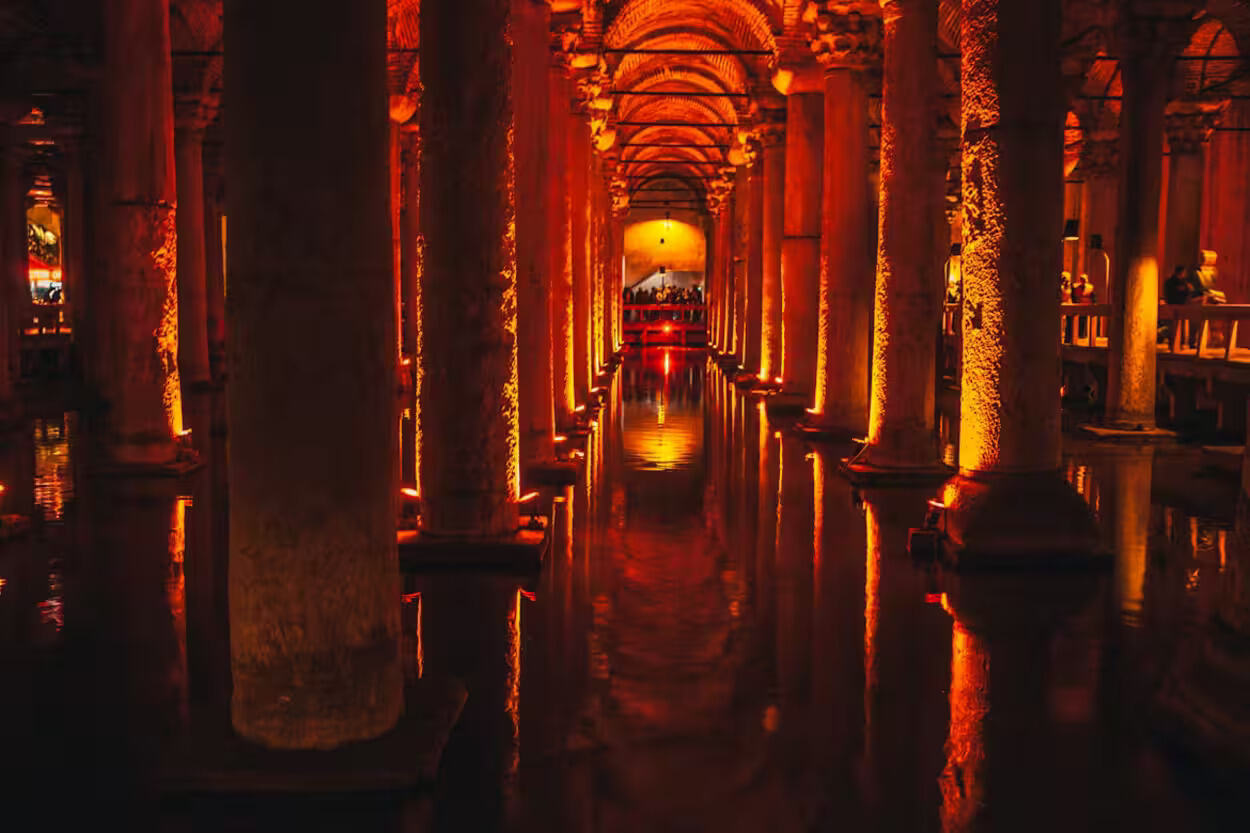
The architectural design of the Basilica Cistern (Yerebatan Sarnıcı) reflects both functionality and aesthetic sophistication. Engineers created an underground structure capable of storing enormous volumes of water while ensuring structural stability for centuries. The symmetry of the columns, combined with the impressive vaulted ceilings, produces a sense of monumental scale rarely experienced in subterranean architecture. The reuse of older materials from Roman buildings demonstrates both practicality and continuity between civilizations.
- Dimensions: About 140 meters long and 70 meters wide, covering a total area of 9,800 m².
- Capacity: Could store up to 80,000 tons of water.
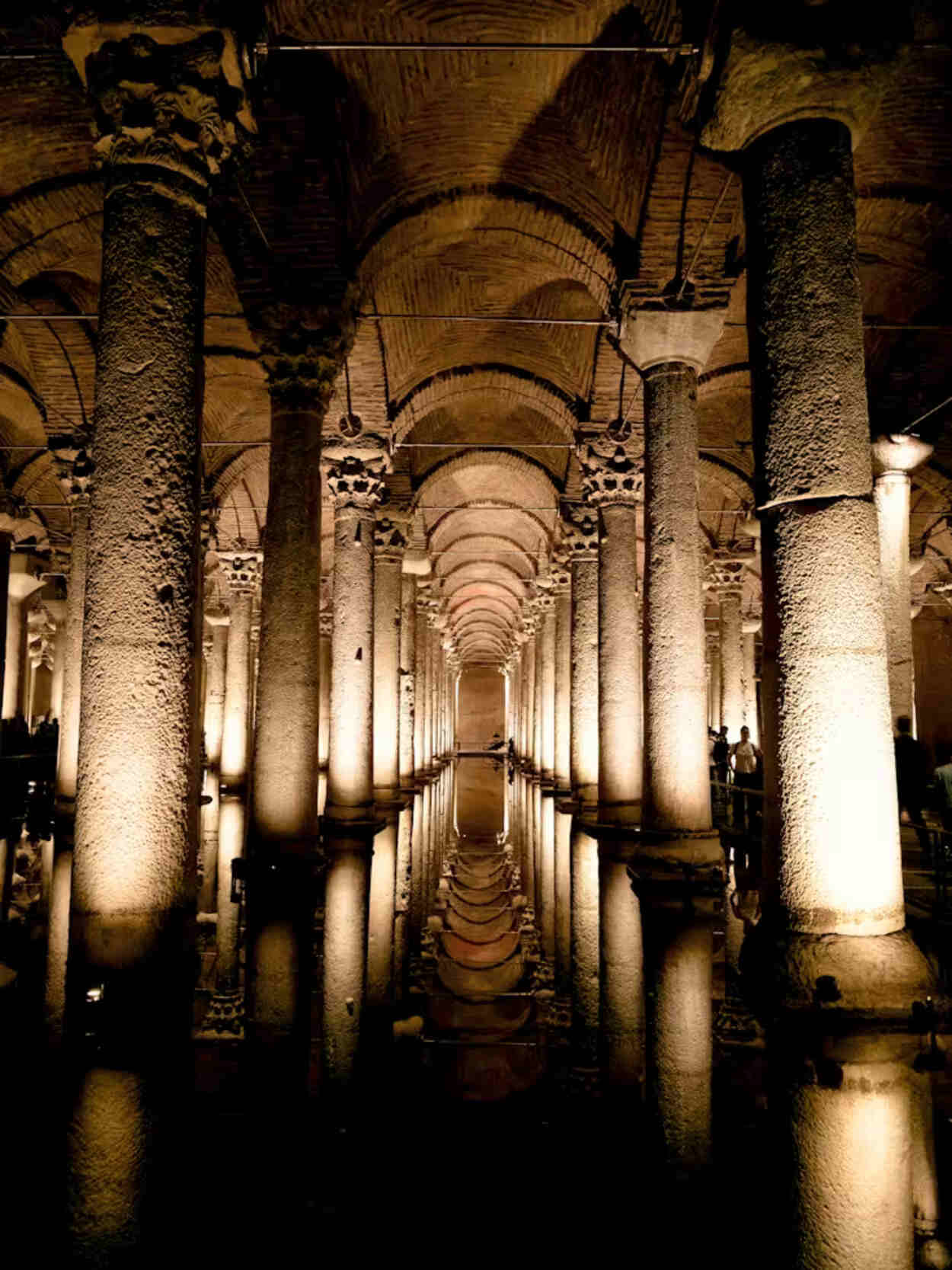
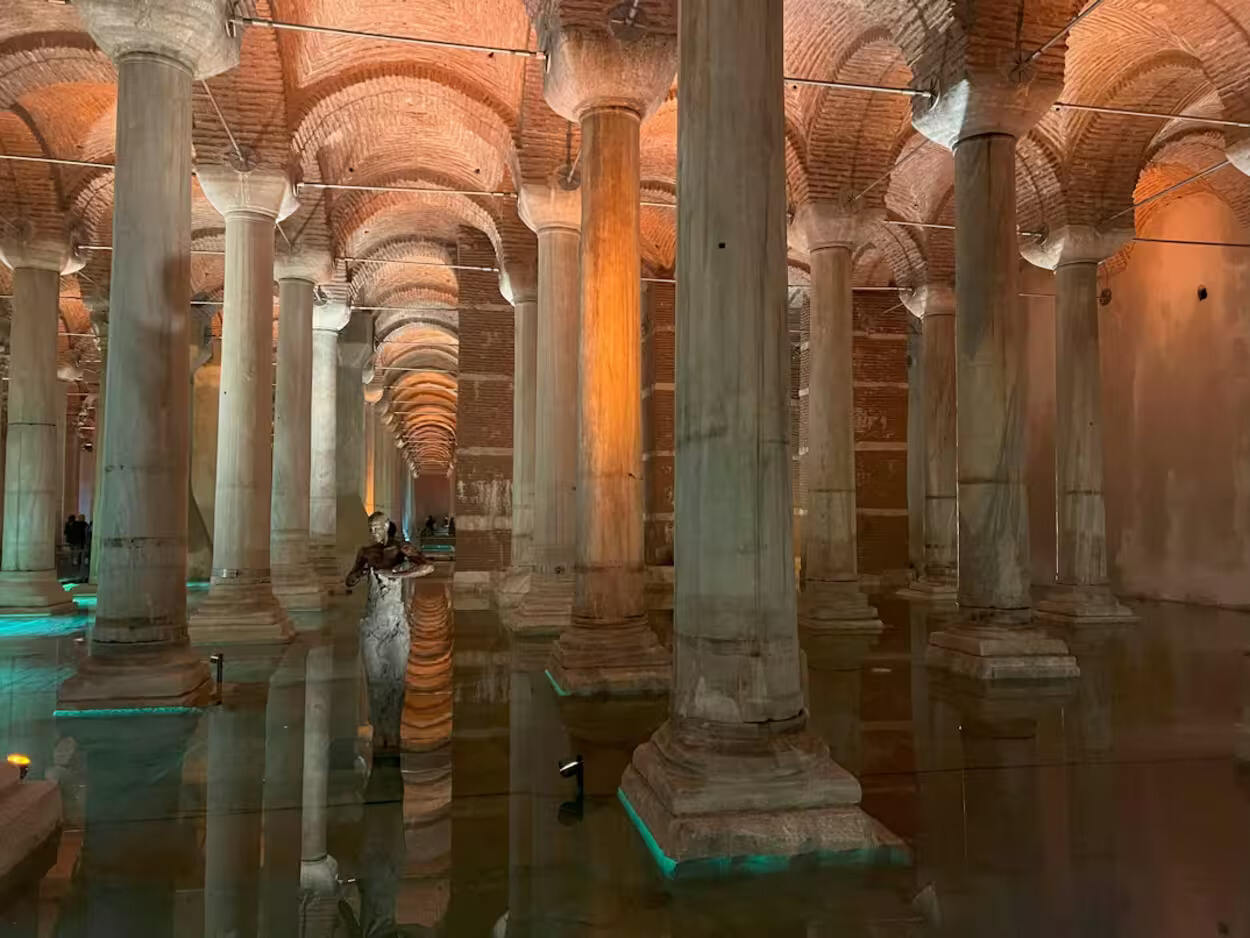
- Columns: 336 marble columns, each about 9 meters high. Many were repurposed (spolia) from earlier Roman and Byzantine structures.
- Arrangement: Columns are aligned in 12 rows.
- Structure: Brick vaults and arches cover the cistern; a special waterproof mortar was used to prevent leakage.
Highlights
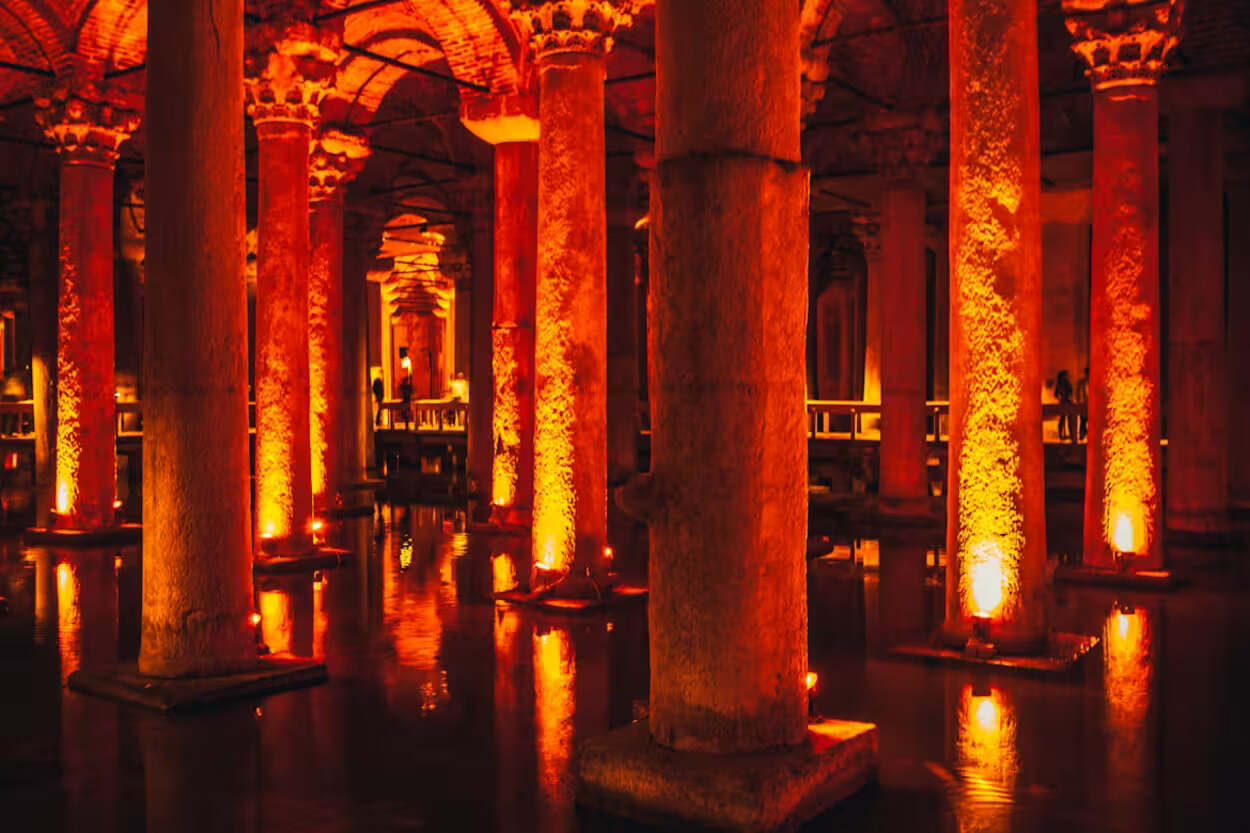
Beyond its engineering function, the cistern contains artistic and symbolic elements that transform it into a cultural monument. Visitors often describe the experience as entering a hidden palace beneath the city. Reflections of columns on shallow water surfaces create visual illusions that enhance its mysterious atmosphere.
- Medusa Heads: Two column bases feature Medusa head carvings—one placed sideways, the other upside down. Believed to have been taken from Roman-era structures, these are among the most striking elements.
- Crying Column: A column decorated with teardrop patterns, thought to commemorate workers who built the cistern.
- Atmosphere: Dim lighting, humidity, and the “forest of columns” create a mystical, dramatic ambiance.
Historical Timeline
Throughout history, the Basilica Cistern (Yerebatan Sarnıcı) adapted to changing political and cultural environments. Its continued use across empires highlights the durability of Byzantine engineering solutions. Even after losing its primary function, the structure remained a silent witness to Istanbul’s transformation from Constantinople to an Ottoman and later modern metropolis.
- In the Byzantine era, water was brought via aqueducts such as the Valens Aqueduct and stored here.
- During the Ottoman period, it continued to be used, mainly serving the water needs of Topkapi Palace.
- Over time it was forgotten, until rediscovered in the 16th century by traveler Petrus Gyllius.
Today
Today, the Basilica Cistern represents an intersection of history, tourism, and cultural preservation. Modern restoration projects have improved lighting systems, visitor circulation routes, and conservation methods while maintaining historical authenticity. Carefully designed walkways allow visitors to explore the space without damaging the ancient foundations.
- Restored and opened to visitors; it is now one of Istanbul’s most popular tourist attractions.
- Visitors can walk on wooden platforms inside, admire the Medusa heads, and explore the unique column layout.
- It also hosts concerts, art exhibitions, and cultural events.
Significance
The Basilica Cistern is both an engineering marvel of Byzantine architecture and a powerful symbol of Istanbul’s layered history. It demonstrates how infrastructure can evolve into cultural heritage over centuries. The balance between utility, artistry, and atmosphere makes the cistern unique among historical monuments. Today it not only preserves the memory of Byzantine ingenuity but also reinforces Istanbul’s identity as a city where civilizations overlap and coexist.
Unlike many monuments that stand visibly above ground, the Basilica Cistern surprises visitors through discovery. Descending into the structure offers a symbolic journey into the hidden foundations of the city itself. Its preservation ensures that future generations can understand how ancient societies solved urban challenges while creating spaces of unexpected beauty.
Basilica Cistern (Yerebatan Sarnıcı) Visitor Information
🕒 Visiting Hours
- Open every day between 09:00 – 22:00.
- Last admission: 18:30
- Night Shift: 19:30 – 22:00, with a different ticket price policy.
💰 Ticket Prices
| Visiting Period | Foreign Visitors | Turkish Citizens | Children |
|---|---|---|---|
| 09:00 – 18:30 | ₺1,500 | Same tariff (discounts available for students) | Free under age 7 |
| 19:30 – 22:00 (Night Shift) | ₺2,400 | Same or reduced tariff | Free under age 7 (discounts for students) |
⚠️ Visitor Tips
- The Night Shift offers a special experience beyond standard visiting hours.
- Always check official sources for updated ticket prices and opening hours before your visit.
- Since the cistern is underground, the environment is cool and humid; the floor may be slippery. Wear comfortable, non-slip shoes.
- For a quieter experience, visit early in the morning or late in the evening; midday is the busiest time.
If you’ve visited the Basilica Cistern (Yerebatan Sarnıcı), you should also see Hagia Sophia and the Sultan Ahmed Mosque, which are very close by.