Temple of Augustus
🏛️ The Temple of Augustus is one of Ankara’s most extraordinary historical treasures, offering visitors a direct connection to the Roman Empire in the heart of modern Turkey. Located in the historic Ulus district beside Hacı Bayram Mosque, this ancient structure represents over two millennia of history, political power, and cultural transformation.
📜 Historical Origins of Temple of Augustus
The construction of the Temple of Augustus dates back to the 1st century BC following the Roman conquest of central Anatolia. Built in honor of Emperor Augustus, the first ruler of the Roman Empire, the temple symbolized Rome’s authority and influence in the region then known as Ancyra.
After the death of Augustus in AD 14, the temple gained even greater significance. It became a center of imperial worship, reinforcing loyalty to Rome while integrating local traditions with Roman religious practices. Over centuries, the structure witnessed the transition from pagan Roman beliefs to Christian and later Islamic civilizations.
🏗️ Architectural Features and Design
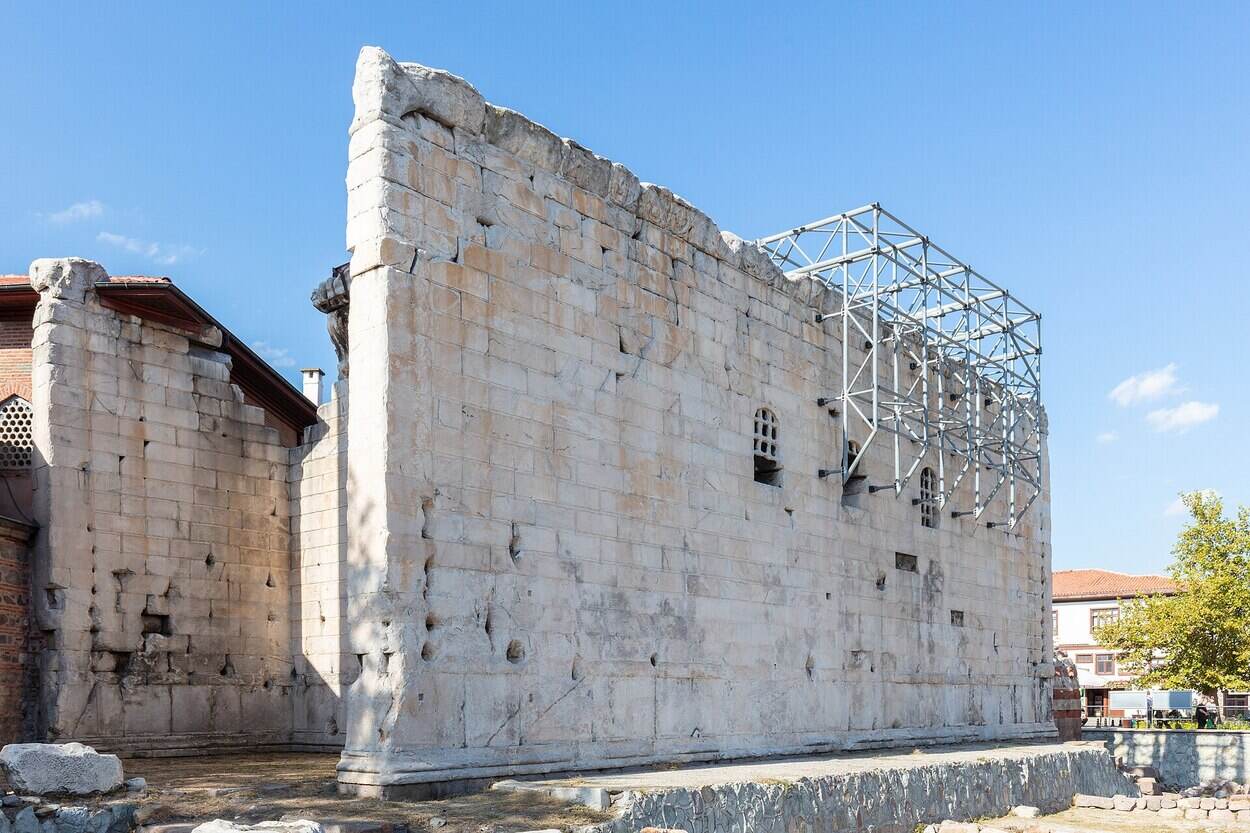
The Temple of Augustus reflects classical Roman architectural principles combined with local Anatolian construction techniques. Although partially ruined today, the remaining walls and columns still reveal the temple’s original grandeur.
- 🧱 Built using large limestone blocks typical of Roman engineering
- 🏛️ Rectangular cella surrounded by impressive columns
- 📐 Elevated platform emphasizing imperial authority
- 🪨 Monumental entrance aligned with ceremonial pathways
- 🧩 Structural adaptations made during Byzantine and later periods
Even in its incomplete state, visitors can clearly visualize the temple’s monumental presence during Roman times.
📖 Monumentum Ancyranum — The Queen of Inscriptions
One of the most remarkable aspects of the Temple of Augustus is the famous inscription known as the “Monumentum Ancyranum.” This text contains the Res Gestae Divi Augusti, the autobiographical account written by Emperor Augustus himself.
Scholars often refer to this inscription as the “Queen of Inscriptions” because it preserves one of the most complete records of Roman imperial propaganda and governance. The Latin text carved into the temple walls details Augustus’s political achievements, military victories, and public works across the empire.
Today, historians rely heavily on these inscriptions to understand early Roman administration and imperial ideology.
🌍 Location and Cultural Context
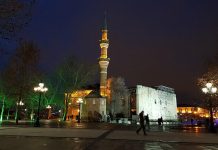
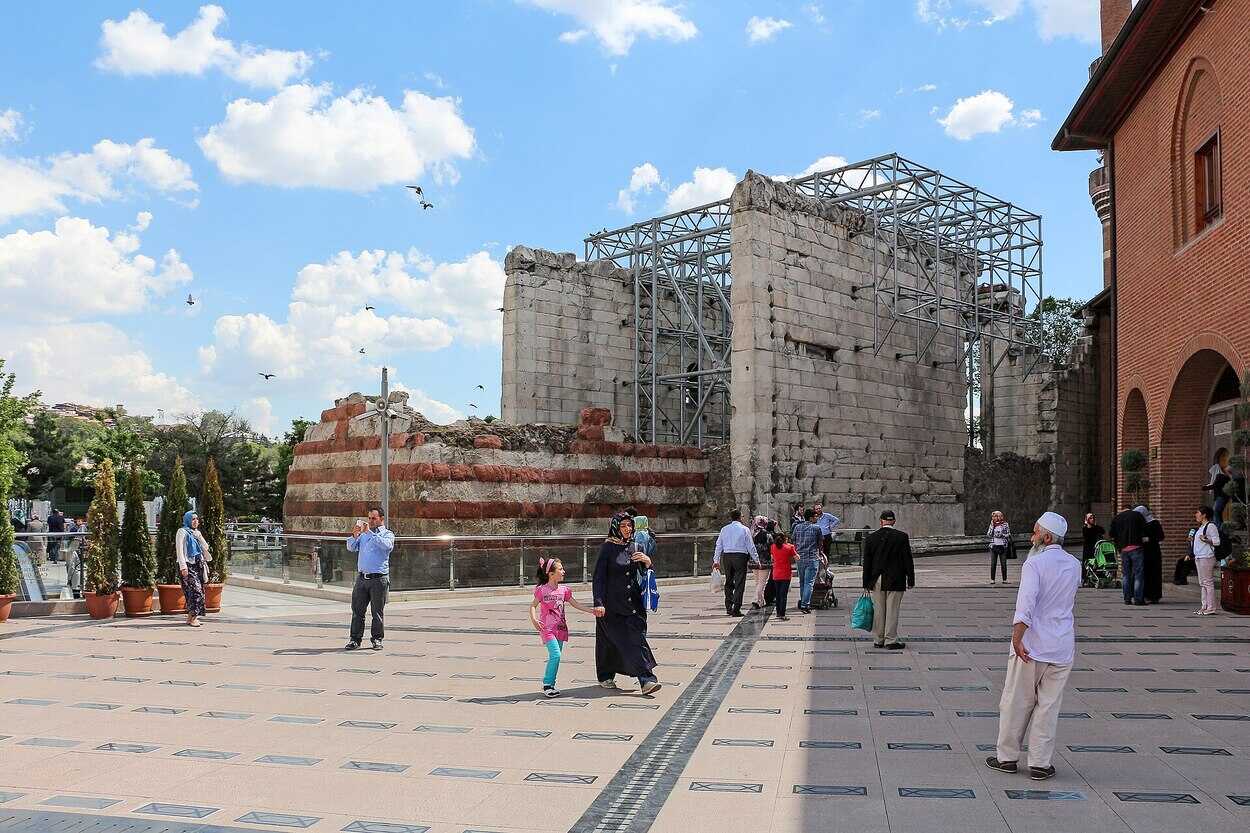
The Temple of Augustus stands uniquely beside the Hacı Bayram Mosque, creating one of Turkey’s most fascinating historical contrasts. Ancient Roman stones and an active Ottoman-era mosque coexist within the same square, representing centuries of cultural continuity.
This rare architectural dialogue between civilizations makes the area one of Ankara’s most photographed and intellectually compelling sites. Visitors can observe how different religions and empires layered their presence without completely erasing the past.
⛪ Transformation Through Civilizations
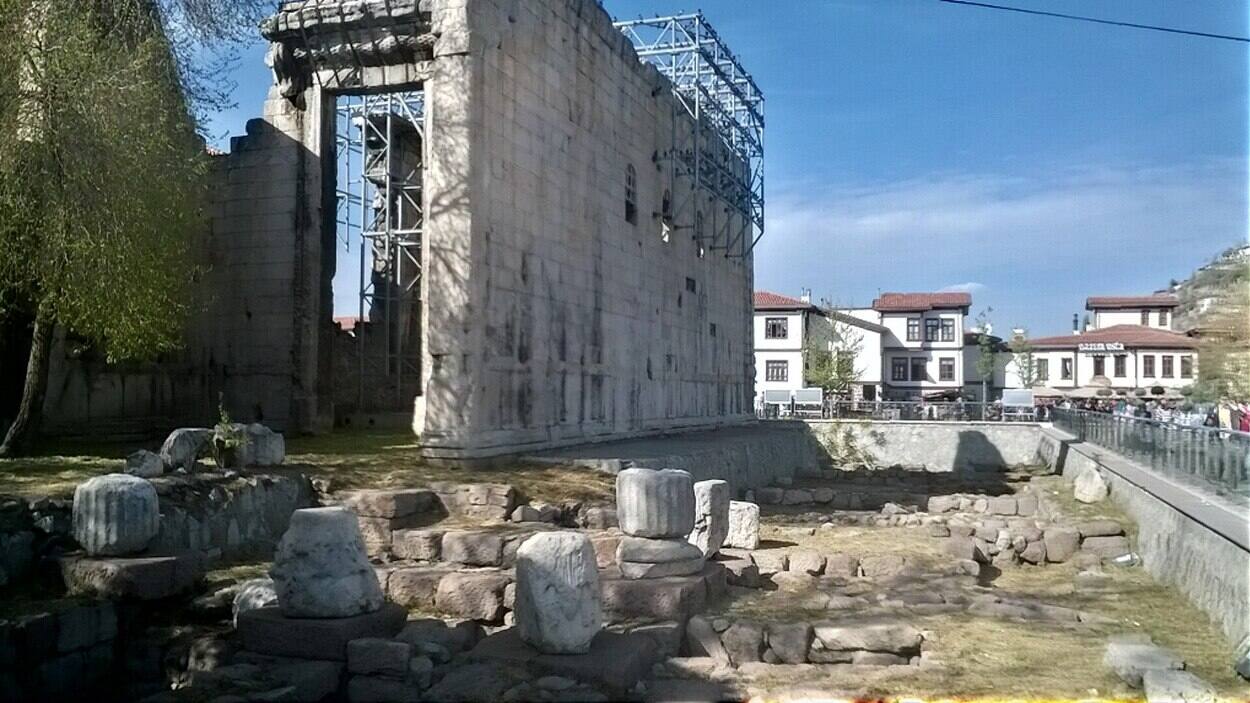
Throughout history, the Temple of Augustus adapted to changing political and religious environments:
- ✝️ Converted into a church during the Byzantine era
- 🕌 Integrated into the expanding Islamic urban landscape
- 🛠️ Preserved through Ottoman and Republican restoration efforts
- 📚 Studied extensively by archaeologists and historians
These transformations allowed the structure to survive while many ancient temples disappeared entirely.
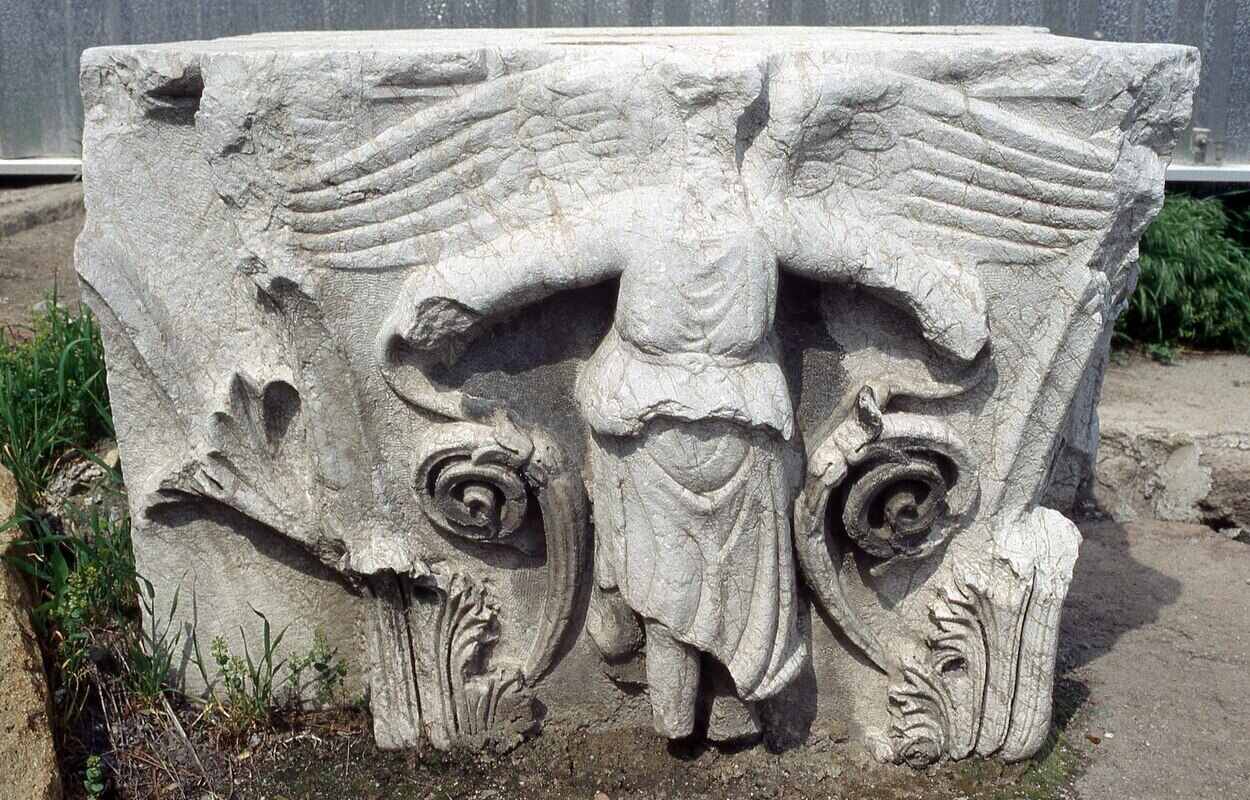
📸 Visiting Temple of Augustus Today
Modern travelers visiting the Temple of Augustus experience an open-air archaeological site surrounded by lively city life. The contrast between ancient ruins and modern Ankara provides a memorable atmosphere.
- 🎟️ Free public access
- 📷 Ideal photography location
- 🚶 Walking distance from Ankara Castle and Ulus Square
- 🕘 Accessible throughout the day
- 🧭 Perfect stop on a historical walking route
Early morning visits offer quieter surroundings, while evening lighting highlights the texture of ancient stones beautifully.
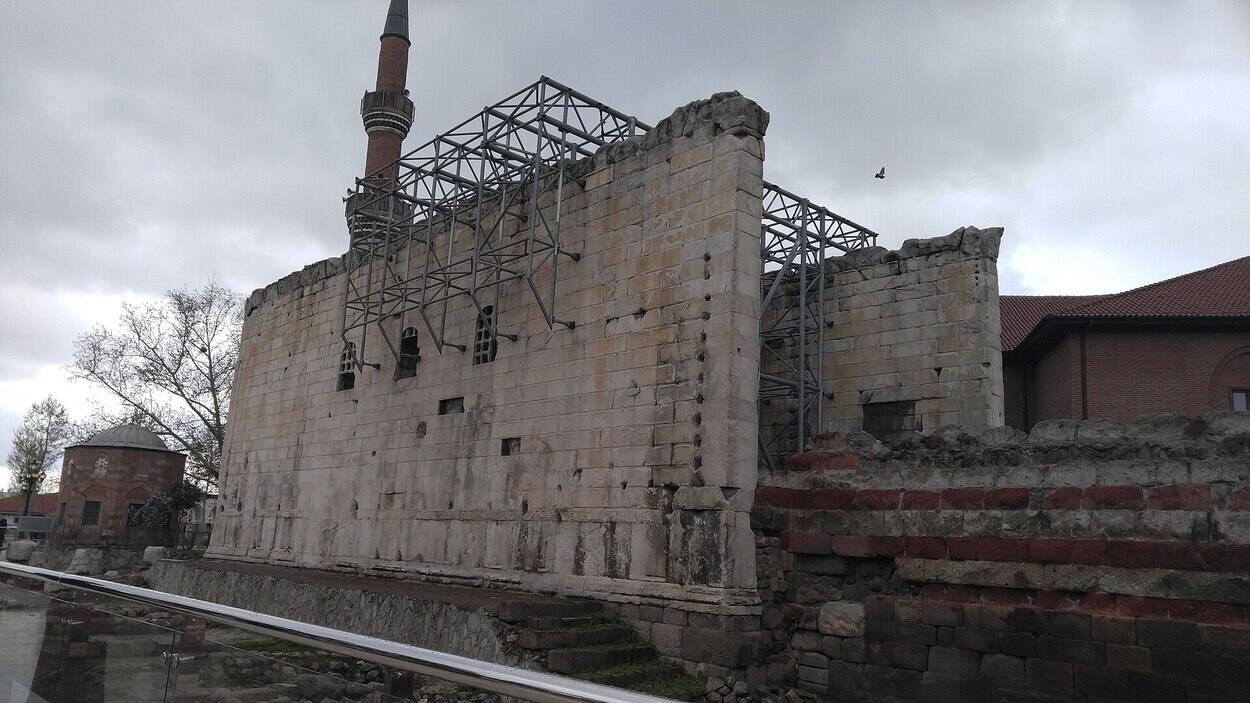
🏺 Why Temple of Augustus Matters Today
The importance of the Temple of Augustus extends beyond archaeology. It represents the political messaging, religious evolution, and architectural achievements of one of history’s greatest empires.
For travelers interested in Roman history, the temple serves as one of the most significant surviving monuments outside Italy. For casual visitors, it provides an accessible and visually striking introduction to Ankara’s ancient past.
The monument also demonstrates how modern Turkey protects and integrates historical heritage into everyday urban life.
✨ Travel Tips and Visitor Advice
- 🧭 Combine your visit with Hacı Bayram Mosque for historical contrast
- 📸 Bring a wide-angle lens for architectural photography
- ☀️ Visit during sunset for dramatic lighting
- 📚 Read about Augustus beforehand to enhance understanding
- 👟 Wear comfortable shoes for exploring nearby historical streets
A visit to the Temple of Augustus offers an immersive journey through Roman, Byzantine, Ottoman, and modern Turkish history all within a single location.
🧿 Final Thoughts on Temple of Augustus
The Temple of Augustus stands as one of Ankara’s most valuable historical landmarks, bridging ancient imperial ambition with contemporary cultural identity. Its inscriptions, architecture, and unique location make it an essential destination for anyone seeking to understand the deep historical layers of Anatolia.
Whether you are a history enthusiast, architecture lover, or cultural traveler, this remarkable monument provides a powerful reminder that civilizations evolve, but history remains visible for those willing to explore it.