General Information Suleymaniye Mosque
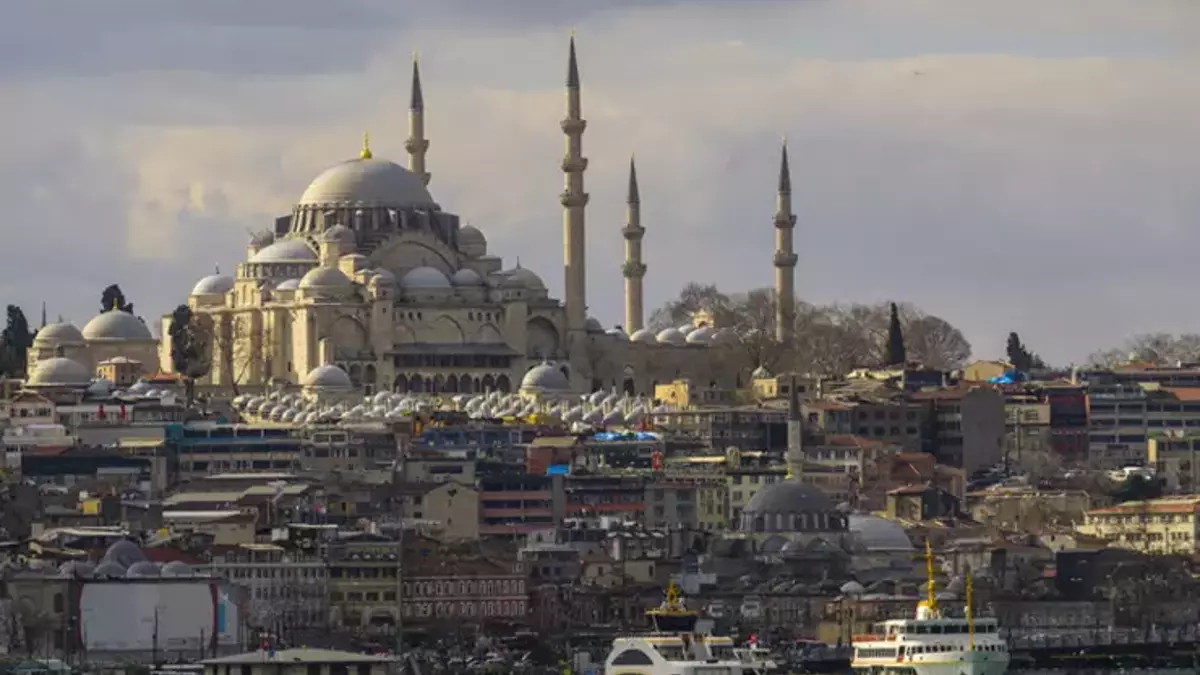
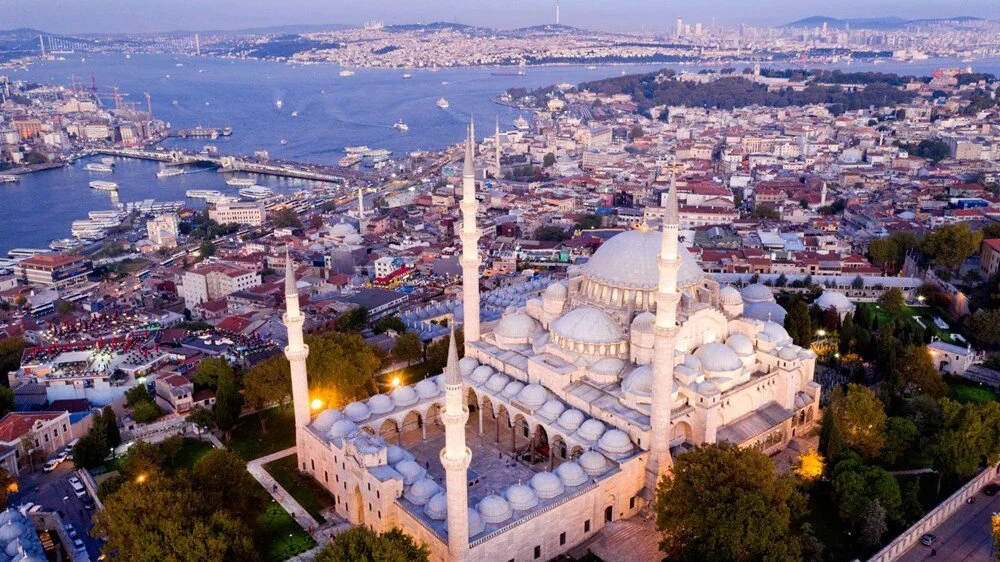
- Location: Fatih district, Istanbul, overlooking the Golden Horn and strategically positioned on one of the city’s seven historic hills.
- Construction Date: Built between 1550 – 1557 during the height of Ottoman imperial power.
- Patron: Ottoman Sultan Suleiman the Magnificent, whose reign marked the political, cultural, and architectural golden age of the empire.
- Architect: Mimar Sinan, the chief imperial architect, who described the Süleymaniye Mosque as his “masterpiece of apprenticeship,” representing the culmination of decades of architectural experimentation.
- Significance: One of the most important and magnificent monuments of the Classical Ottoman period, combining religious devotion, engineering mastery, and imperial symbolism.
- Urban Role: Designed not only as a mosque but as a monumental centerpiece shaping Istanbul’s skyline and urban identity.
Architectural Features
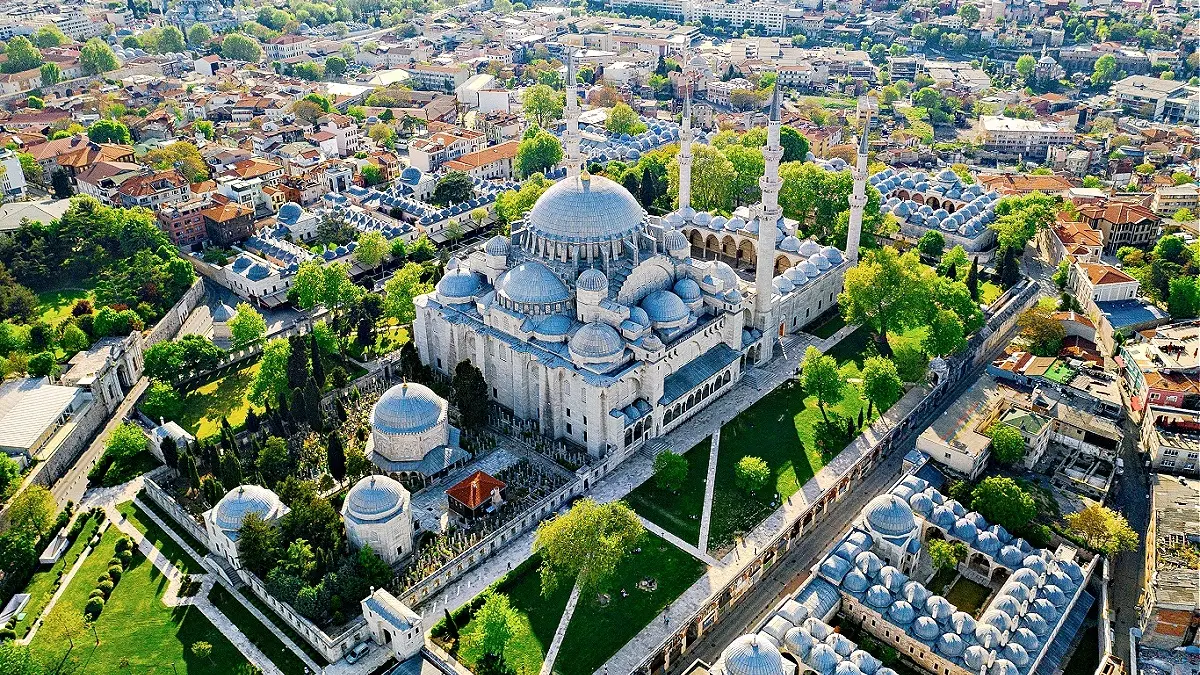
- Design: A perfectly balanced composition centered around a monumental dome supported by semi-domes and massive piers, creating both visual harmony and structural stability.
- Dome: Measuring 27.5 meters in diameter and rising 53 meters high, the dome reflects Sinan’s ambition to rival the spatial grandeur of Hagia Sophia while achieving greater structural clarity.
- Minarets: Four elegant minarets containing ten balconies symbolize Sultan Suleiman as the fourth Ottoman ruler after the conquest of Istanbul and the tenth sultan of the empire.
- Engineering: Advanced earthquake-resistant construction techniques were applied, including flexible foundations and hidden buttressing systems integrated into surrounding buildings.
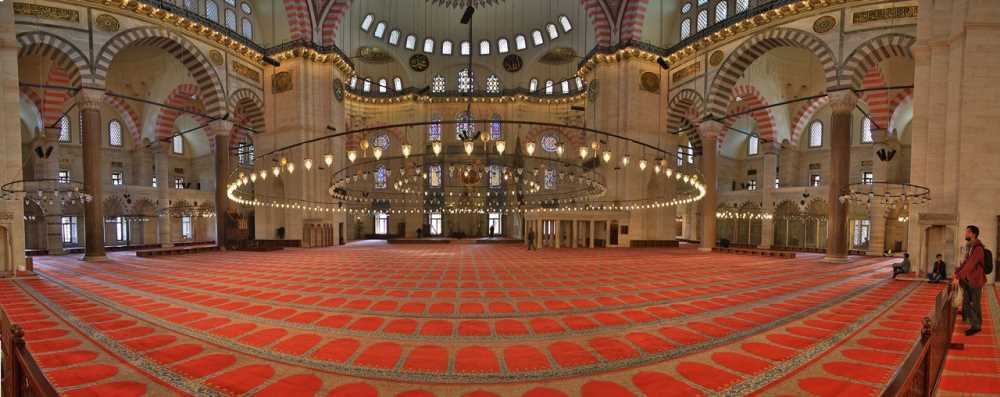
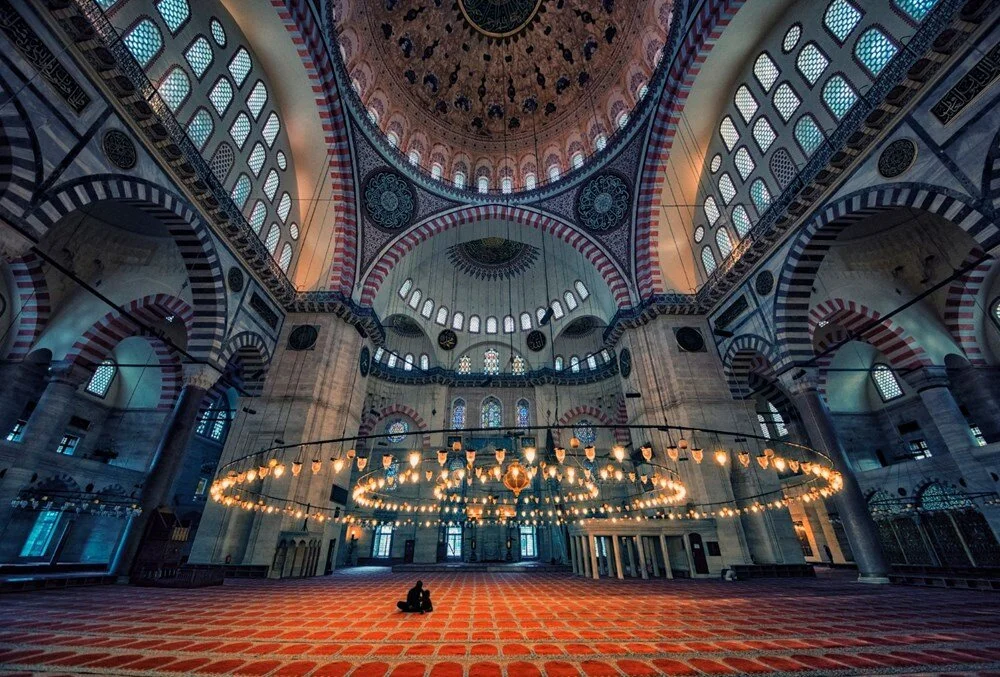
- Interior Space: The mosque combines monumental scale with spiritual calmness. Natural light filters through more than 100 windows, emphasizing openness and serenity rather than excessive ornamentation.
- Acoustics: Carefully placed ceramic jars embedded within the walls improve sound resonance, allowing sermons and prayers to be clearly heard without modern amplification.
- Courtyard: A grand marble courtyard surrounded by arcades and crowned with a central ablution fountain, regarded as one of the finest courtyard designs in Ottoman mosque architecture.
Art and Decoration
- Decoration follows the classical Ottoman principle of restrained elegance. Instead of overwhelming ornamentation, architectural proportions themselves create aesthetic impact.
- İznik tiles are used selectively, directing attention toward spatial harmony rather than decorative excess.
- Calligraphy panels created by master Ottoman calligraphers display Quranic verses emphasizing wisdom, justice, and divine unity.
- The mihrab and minbar are crafted from finely carved marble, demonstrating exceptional Ottoman stone craftsmanship.
- Large hanging chandeliers positioned low within the prayer hall create intimacy and reinforce the human scale despite the mosque’s monumental dimensions.
Complex (Külliye)
The Süleymaniye Mosque forms the heart of an extensive külliye (social complex), reflecting the Ottoman philosophy that religious institutions should also serve social, educational, and charitable functions.
- Madrasas providing advanced religious and scientific education.
- A public library supporting scholarship and intellectual life.
- A traditional Turkish bathhouse serving community hygiene needs.
- An imaret (public soup kitchen) distributing free meals to the poor.
- A hospital offering medical services to citizens.
- Caravanserai and guest facilities for travelers and scholars.
- Mausoleums honoring imperial figures.
Within the garden stand the tombs of Sultan Suleiman the Magnificent and his wife Hürrem Sultan (Roxelana). These mausoleums represent both political authority and personal legacy, making the complex a place of historical memory as well as religious devotion.
Religious and Historical Importance
- The mosque symbolizes the peak of Ottoman imperial confidence during the 16th century, when Istanbul functioned as one of the world’s leading political and cultural capitals.
- It represents the mature architectural philosophy of Mimar Sinan, blending structural logic, aesthetics, and spirituality into a unified design.
- Its commanding position dominates the historic skyline of Istanbul and remains visible from the Bosphorus, Golden Horn, and many surrounding districts.
- The mosque has continuously functioned as an active place of worship for nearly five centuries, preserving its original religious purpose.
- Scholars consider Süleymaniye Mosque a defining example of Classical Ottoman architecture and urban planning.
Visitor Information
- Admission: Free of charge for all visitors.
- Dress Code: Modest clothing is required. Women should cover their heads; shoulders and knees must be covered for all visitors.
- Prayer Times: Tourist visits pause during daily prayers to maintain the mosque’s religious atmosphere.
- Best Visiting Hours: Early morning or late afternoon visits offer quieter conditions and softer natural lighting inside the mosque.
- Viewpoint: The surrounding terraces provide one of the most famous panoramic viewpoints overlooking the Golden Horn, Bosphorus, and historic peninsula.
Significance
The Süleymaniye Mosque stands as more than a religious monument; it represents the intellectual, artistic, and engineering achievements of the Ottoman Empire at its zenith. Through careful proportions, advanced construction techniques, and refined aesthetics, Mimar Sinan achieved a harmonious balance between monumentality and spiritual tranquility.
Today, the mosque remains one of Istanbul’s most defining landmarks. Its silhouette continues to shape the city’s historic panorama, while its peaceful courtyards offer visitors a rare atmosphere of reflection within a bustling metropolis. As both a functioning mosque and a global cultural heritage site, the Süleymaniye Mosque embodies the enduring legacy of Ottoman civilization and is widely regarded as the peak of classical Ottoman architecture.