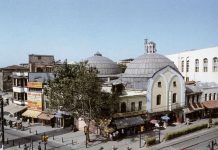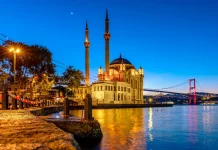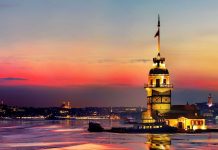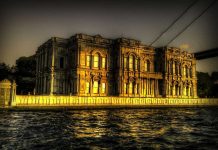
To get to Ayasofya, you can easily reach it by public transportation or a short walk from popular areas in Istanbul. It’s open daily, but be sure to check the specific hours before you visit, as they can vary. There is an entrance fee, so make sure to have some cash or a card handy. Enjoy
History of Hagia Sophia
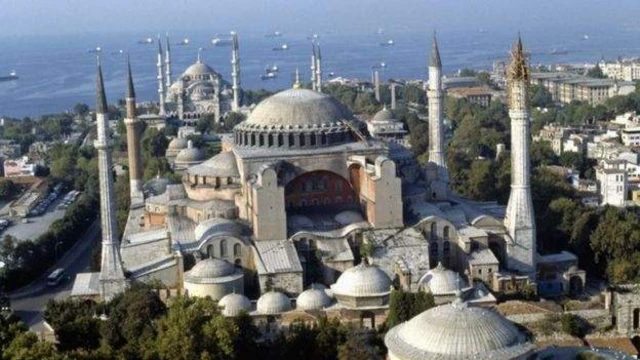
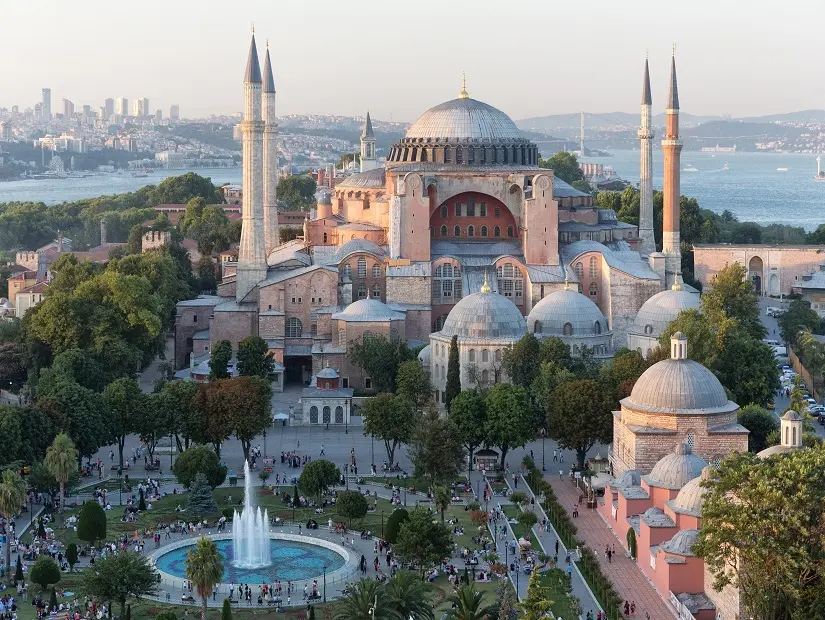
Hagia Sophia (Ayasofya) is one of the most significant architectural monuments in Istanbul and the world. It symbolizes the Byzantine, Ottoman, and modern Turkish heritage.
Hagia Sophia Restoration: Preserving a 1500-Year-Old Legacy
Hagia Sophia, one of the most significant structures in world architectural history and faith tourism, continues to defy time. Maintaining such an ancient and massive building is only possible through a continuous and meticulous Hagia Sophia restoration process. The comprehensive renovation work recently initiated by the Ministry of Culture and Tourism stands out as one of the most extensive projects in the history of the Republic, aiming to protect both the structural safety and the artistic details of the monument.
The Main Objective and Scope of the Restoration
The work carried out in Hagia Sophia is not just a visual renovation; it also aims to prepare the structure for a potential major Istanbul earthquake. The Hagia Sophia renovation process is conducted in stages under the supervision of a Scientific Committee, following the principle of “not interrupting worship and visits during restoration.” In this context, the repair of minarets, cleaning of exterior facades, renewal of lead coverings on the roofs, and structural strengthening works have gained priority.
Visitor Management and Gallery Floor Arrangements
One of the most notable stages of the renovation process is the new visitor management system. With the recent updates, the prayer area and the touristic visiting area of the mosque have been separated. The upper floor (gallery floor), with sections where restoration work has been completed, has been opened to tourists with a museum-exhibition logic. This ensures the tranquility of worshipers while creating a controlled route for tourists who want to see the historical texture and Hagia Sophia mosaics up close.
Structural Strengthening Against Earthquakes
Although the 1500-year-old body of Hagia Sophia has survived many earthquakes in the past, it is being made more resilient with today’s technology. One of the most critical stages of the Hagia Sophia tadilatı (renovation) is intervening at the points where the structure has become fatigued. Static analyses of the minarets have been conducted, and disassembly-repair processes have been initiated where necessary. Additionally, lead plates on the roof are being completely renewed to prevent dampness in the dome, protecting the unique frescoes and calligraphy panels from humidity.
Preservation of Art and Calligraphy
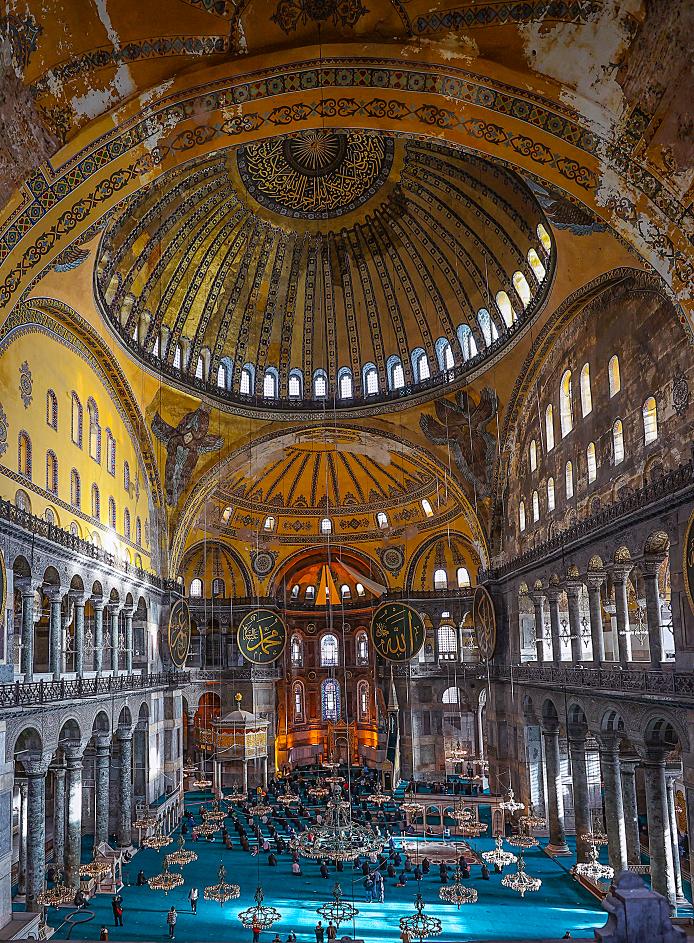
Conservation work continues for the calligraphy panels, mosaics, and marble carvings inside the mosque. Expert restorers are meticulously cleaning layers of soot and dirt accumulated over centuries, revealing the original colors. These efforts prove once again that Hagia Sophia is not just a building, but a living art gallery.
Construction and Byzantine Era
- Date of construction: Built between 532–537 AD by Byzantine Emperor Justinian I.
- Architects: Anthemius of Tralles and Isidore of Miletus, leading mathematicians and architects of their time.
- Purpose: Designed as the largest church of the Byzantine Empire and its central religious structure.
- Feature: It was the largest enclosed space in the world upon completion, with a dome that represented a revolutionary engineering achievement.
Architectural Features
- Dome: 31 meters in diameter, 55 meters high. Supported by four massive piers. It collapsed several times due to earthquakes and was reinforced, especially during the Ottoman era (notably by architect Mimar Sinan).
- Mosaics: Rich Byzantine mosaics depicting Christ, the Virgin Mary, and saints.
- Dimensions: Approximately 70 meters long and 75 meters wide.
Ottoman Era
- 1453: Converted into a mosque by Sultan Mehmed II after the conquest of Constantinople.
- Additions: Minarets, mihrab, minbar, muezzin platforms, and large calligraphic panels were added.
- Mimar Sinan: Strengthened the structure with buttresses and additional supports, ensuring its survival to this day.
Republican Period and Beyond
- 1935: Converted into a museum by the order of Mustafa Kemal Atatürk. This allowed the restoration and preservation of mosaics.
- 2020: Re-converted into a mosque by the Republic of Turkey. It remains open to worship and tourism.
Significance
- World Heritage: Part of Istanbul’s Historic Areas on the UNESCO World Heritage List.
- Cultural Layering: A sacred site for both Christianity and Islam, representing two great civilizations in one monument.
- Tourism: Attracts millions of visitors annually as one of the city’s top landmarks.
Hagia Sophia is not only a place of worship but also a turning point in world architecture, engineering, art, and history.