🏛️ Pergamon Travel Guide
Pergamon Travel Guide is your practical introduction to one of Turkey’s most remarkable archaeological destinations. Rising above the Bakırçay Plain in western Türkiye, ancient Pergamon combines dramatic Hellenistic architecture, Roman monuments, sacred sites, Ottoman heritage, traditional streets, and spectacular views into one extraordinary cultural landscape.
Located in and around modern Bergama in İzmir Province, Pergamon was once the capital of the powerful Attalid dynasty and later became an important Roman city and a major centre of healing, culture, religion, and science. Today, the archaeological remains reveal how several civilizations continuously transformed the same landscape.
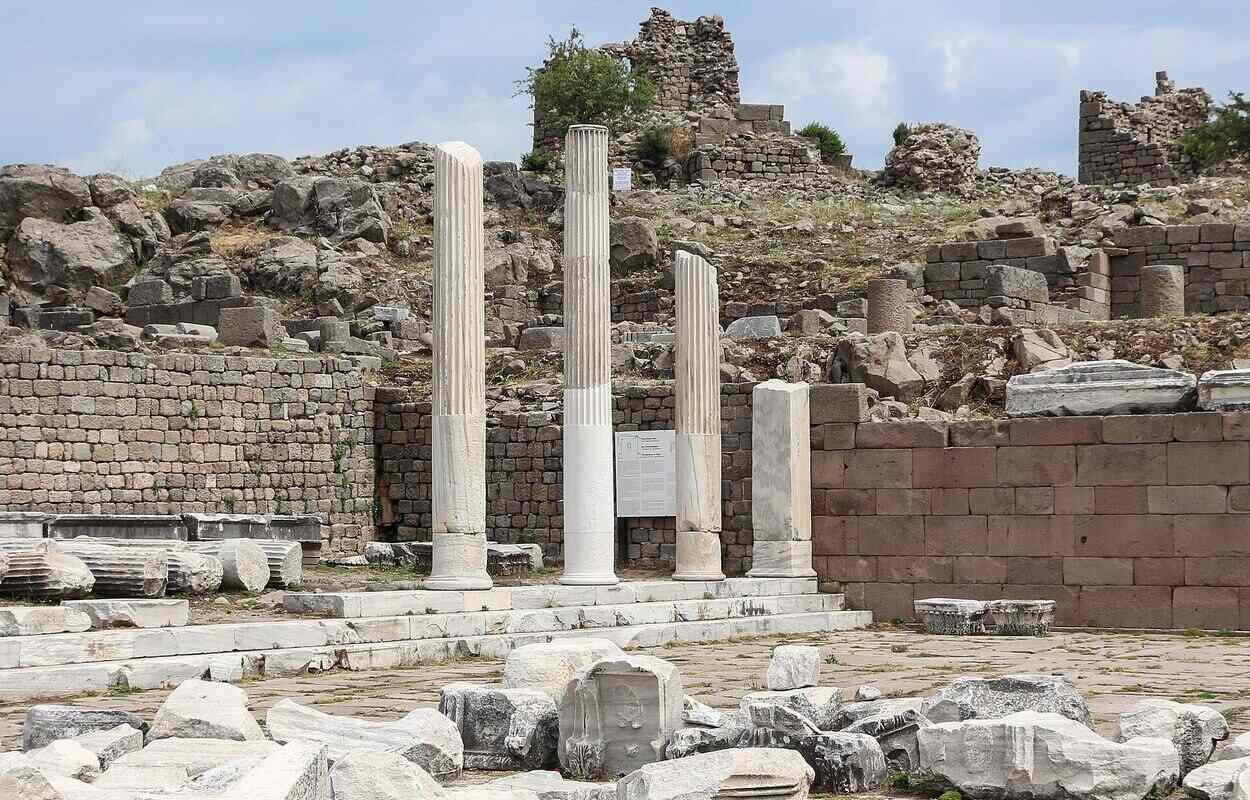
Pergamon Travel Guide Unlike archaeological sites that can be understood through a single historical period, Pergamon is best experienced as a multi-layered destination. The Acropolis represents the monumental Hellenistic city; the Asclepion illustrates Roman-era medicine and healing; the Red Basilica reflects the transformation of the city during the Roman and Byzantine periods; and Bergama’s historic urban fabric preserves Ottoman-era buildings and traditions.
In 2014, Pergamon and its Multi-Layered Cultural Landscape was inscribed on the UNESCO World Heritage List. UNESCO recognizes the site for its exceptional evidence of Hellenistic, Roman, Byzantine, and Ottoman civilization and its outstanding integration of architecture with the natural landscape.
📍 Pergamon at a Glance
- Modern Name: Bergama
- Province: İzmir, Türkiye
- Region: Aegean Region
- Ancient Name: Pergamon
- UNESCO Status: World Heritage Site
- Major Periods: Hellenistic, Roman, Byzantine and Ottoman
- Famous For: Acropolis, Ancient Theatre, Temple of Trajan, Asclepion, Red Basilica and Pergamon Library
- Best For: History, archaeology, architecture, culture and slow travel
Pergamon Travel Guide
Pergamon stands out because its monuments are not isolated ruins. They form part of a broader cultural landscape extending across the modern town and surrounding hills. UNESCO describes the property as a historic landscape in which different civilizations, religions and architectural traditions overlap through time.
🏛️ Overview: Why Visit Pergamon?
Pergamon is one of the most rewarding ancient cities to visit in western Türkiye, particularly for travelers who want more than a quick photograph beside a famous ruin.
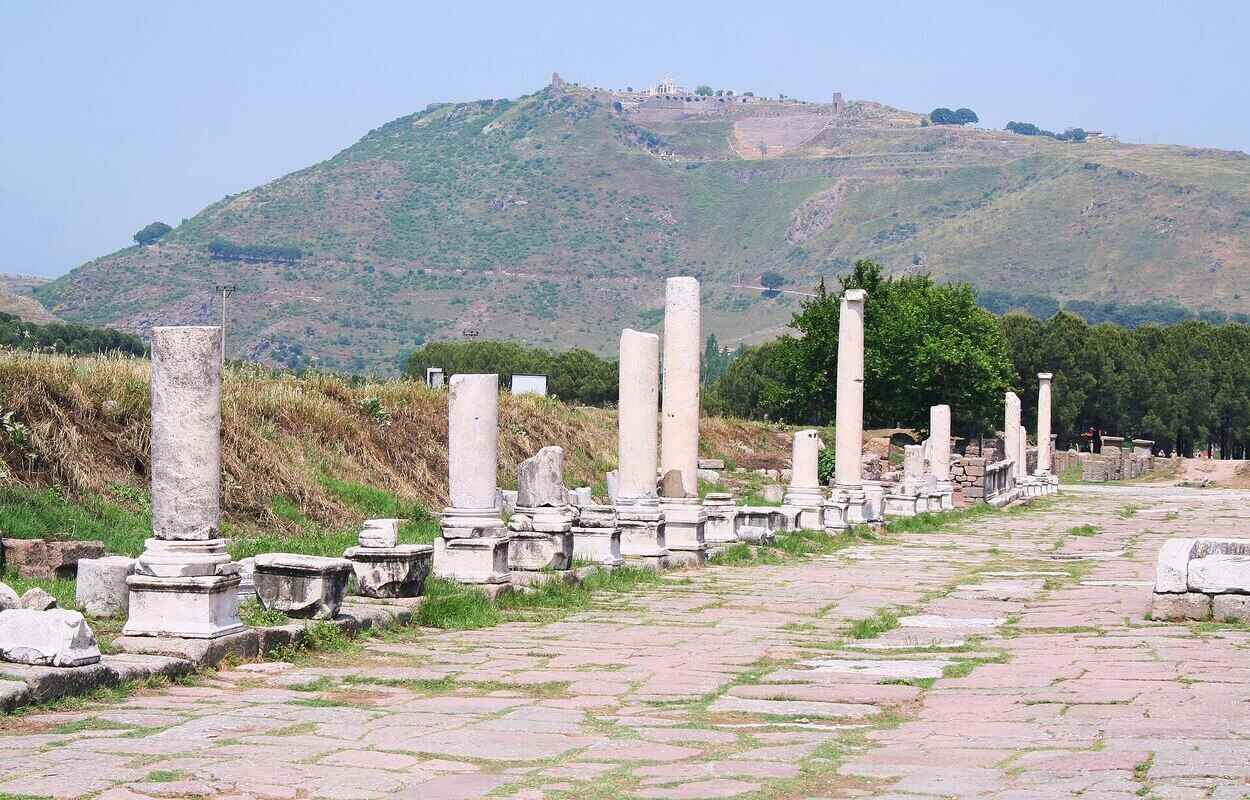
The ancient city was established as the capital of the Attalid dynasty in the 3rd century BC. Its builders used the steep slopes of Kale Hill to create terraces, monumental buildings, temples and public spaces overlooking the Bakırçay Plain. This dramatic relationship between architecture and topography is one of the defining characteristics of Pergamon.
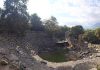
The Acropolis is particularly impressive because of its steep setting. The ancient theatre descends dramatically down the hillside, while the remains of the Temple of Trajan occupy a high terrace above the plain. The former library, gymnasium, temples and stoas reveal the ambition of a city that wanted to compete culturally and politically with other major Hellenistic centres.
Pergamon became even more significant after the Romans inherited the kingdom in the 2nd century BC. During the Roman period, the city developed into a major metropolis and the nearby Asclepion became famous as a healing centre. The physician Galen, one of antiquity’s most influential medical figures, was trained in Pergamon.
But Pergamon did not disappear after antiquity. Byzantine and Ottoman layers remain part of the modern landscape. This continuous transformation is precisely what makes Bergama different from many other ancient cities in Türkiye.
💡 Travel Tip: Do not plan Pergamon as only a two-hour archaeological stop. To understand the destination properly, combine the Acropolis, Asclepion, Red Basilica and historic Bergama town.
📜 History of Pergamon
🏺 Early Pergamon and the Hellenistic Kingdom
Pergamon became a major political centre during the Hellenistic period when it was developed as the capital of the Attalid dynasty. The rulers transformed the steep Kale Hill into a monumental urban centre overlooking the fertile Bakırçay Plain.
The city’s location was strategically important. From the high Acropolis, the rulers could dominate the surrounding landscape while creating a spectacular visual statement of political power.
Architecture was central to this strategy. Temples, stoas, theatres, public buildings and educational institutions were arranged across terraces adapted to the natural slope.
📚 Pergamon as a Centre of Learning
Pergamon became famous for scholarship, literature, art and science. The city developed a major library and a distinguished sculpture tradition. UNESCO identifies the Attalid period as a time when Pergamon developed considerable political and artistic influence in the Hellenistic world.
The city is also closely associated with the history of parchment. The word “parchment” itself is derived from Pergamon in many European languages, reflecting the city’s long-standing association with the development and production of prepared animal-skin writing material.
The famous library of Pergamon became part of the city’s rivalry with other intellectual centres of the ancient Mediterranean. Although the library itself does not survive as an intact building, its historical importance contributes greatly to Pergamon’s reputation as a city of knowledge.
🏛️ Roman Pergamon
In 133 BC, the Attalid kingdom passed into Roman control through the bequest of its last ruler, Attalus III. Pergamon subsequently became an important Roman centre in Asia.
The Romans maintained and expanded important parts of the earlier city while introducing new architectural and religious functions. The Asclepion became particularly important during this period, functioning as a sanctuary and healing complex.
Roman Pergamon was therefore not simply a continuation of the Hellenistic city. It became a new urban and cultural environment in which Greek traditions, Roman imperial culture and local Anatolian traditions interacted.
✝️ Byzantine Pergamon
During the Byzantine period, Pergamon gradually lost some of its earlier political and economic importance as major trade routes and political centres shifted toward northwestern Anatolia and Constantinople.
Nevertheless, the city remained significant as a religious centre. Pergamon is traditionally associated with one of the Seven Churches of Revelation mentioned in the Book of Revelation.
The remains of the Roman Serapeum also demonstrate how buildings could acquire new functions over time. UNESCO notes that this complex underwent religious transformations, including use as a church and later incorporation into Islamic and Ottoman religious life.
🕌 Ottoman Bergama
The Ottoman period added another layer to the landscape. Mosques, baths, bridges, markets, khans and other urban structures developed around and over earlier Roman and Byzantine layers.
This is one of the reasons modern Bergama should not be treated merely as a gateway to an archaeological site. The town itself is part of the cultural heritage experience.
UNESCO specifically recognizes the continuity of settlement and the interaction between Hellenistic, Roman, Byzantine and Ottoman structures as a defining characteristic of the World Heritage property.
🎯 Things to Do in Pergamon
1. 🏛️ Explore the Pergamon Acropolis
The Acropolis of Pergamon is the essential starting point for understanding the ancient city.
Located high on Kale Hill, the Acropolis provides both archaeological depth and spectacular views across the Bakırçay Plain. The terrain is part of the monument: Pergamon’s architects deliberately incorporated the steep natural slope into the design of the city.
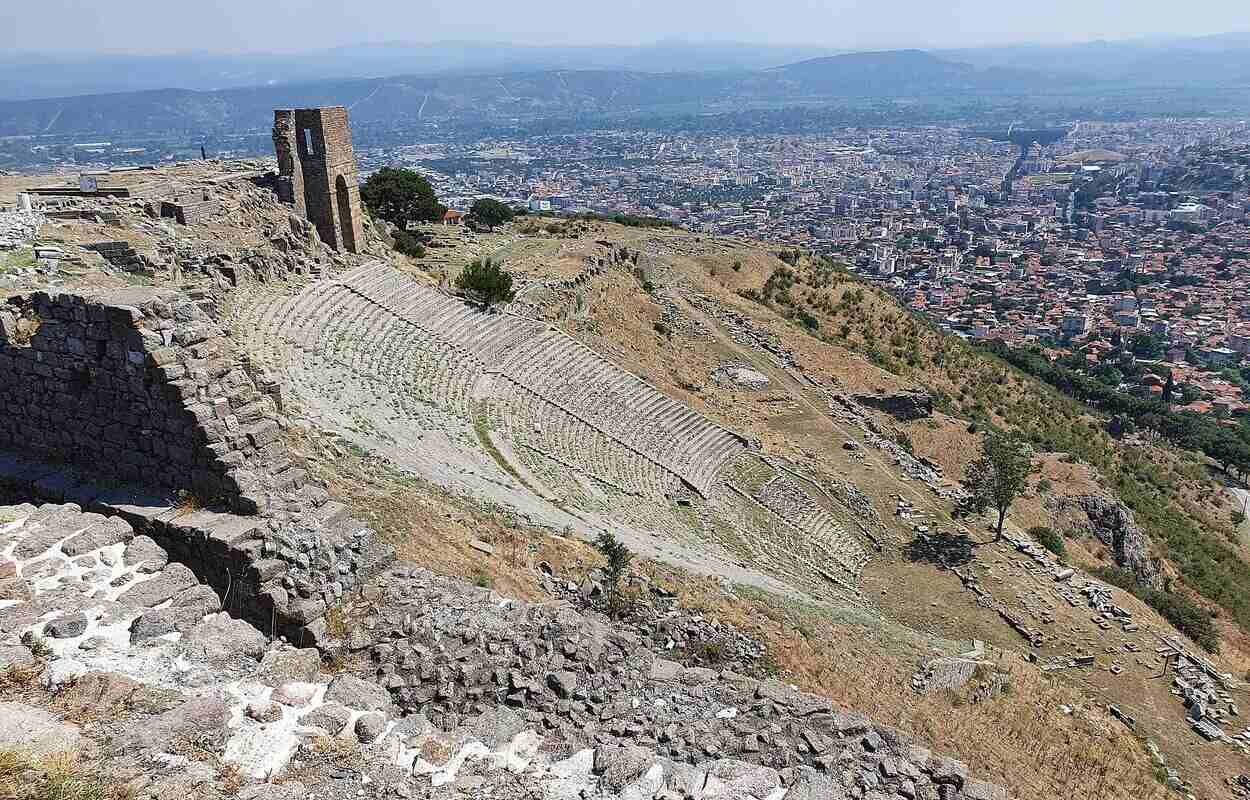
As you walk through the site, look beyond individual ruins and consider the original urban plan. The terraces, public buildings, temples, theatre and defensive structures were designed as an integrated city.
2. 🎭 See the Ancient Theatre
The theatre is among Pergamon’s most dramatic monuments. Built into the steep hillside, its design takes advantage of the natural terrain.
Standing near the theatre provides one of the clearest examples of how Pergamon’s architects used geography as an architectural tool.
The steepness of the theatre is not an accident. It is part of the visual and structural character of the Acropolis.
📸 Photography Tip: The theatre is particularly impressive when photographed from an angle that captures both its steep seating area and the landscape beyond it.
3. 🏛️ Discover the Temple of Trajan
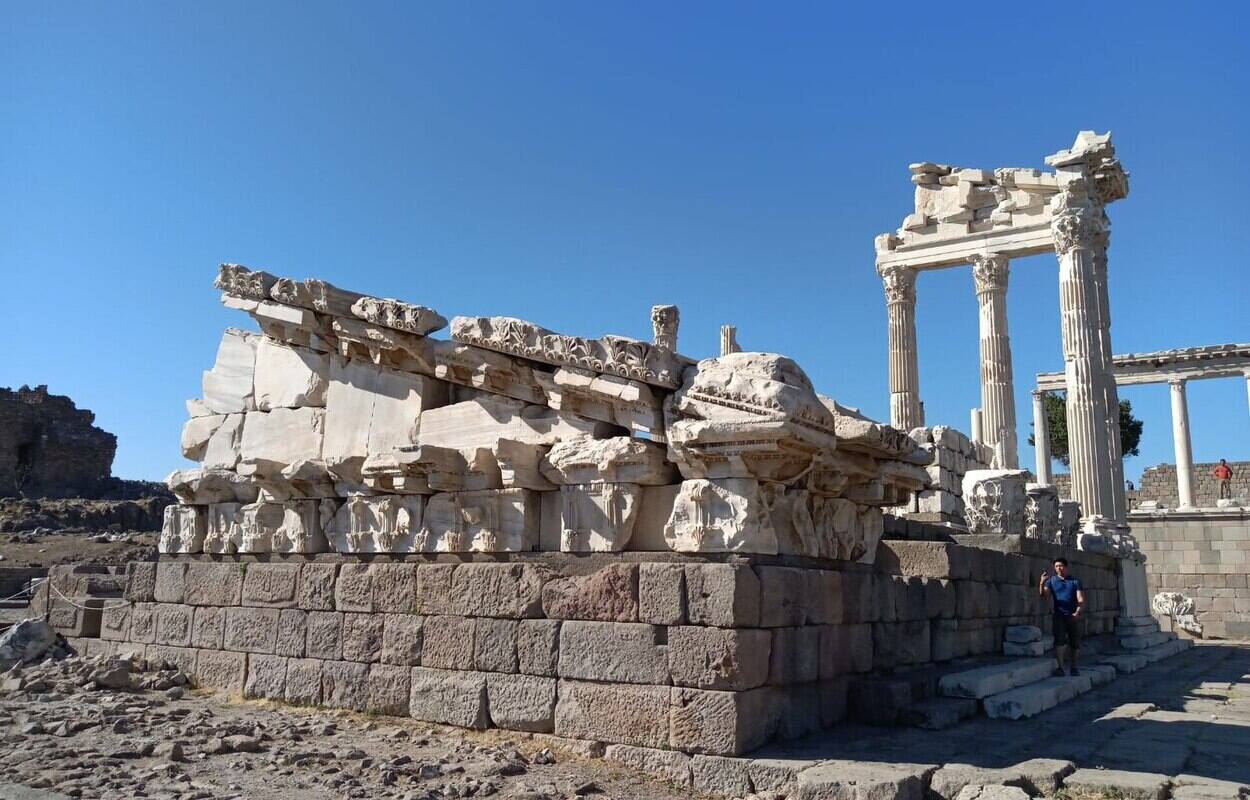
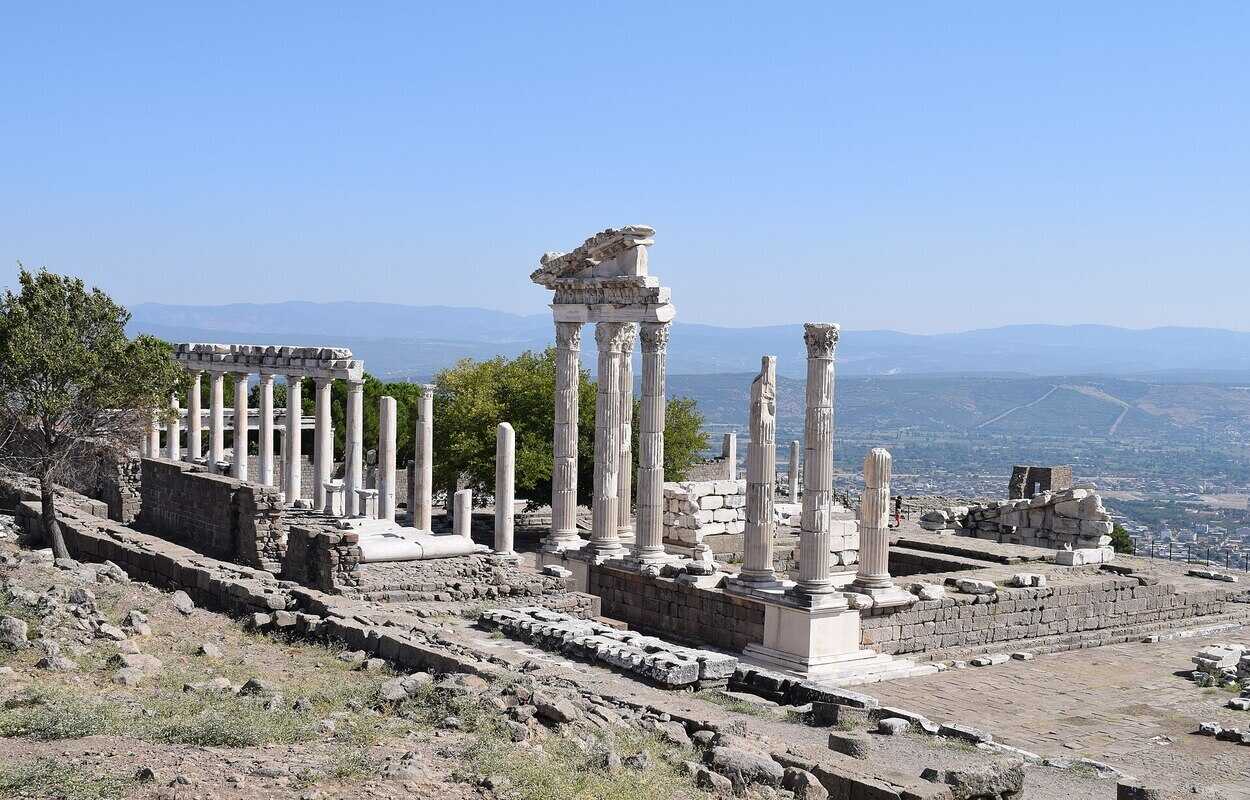
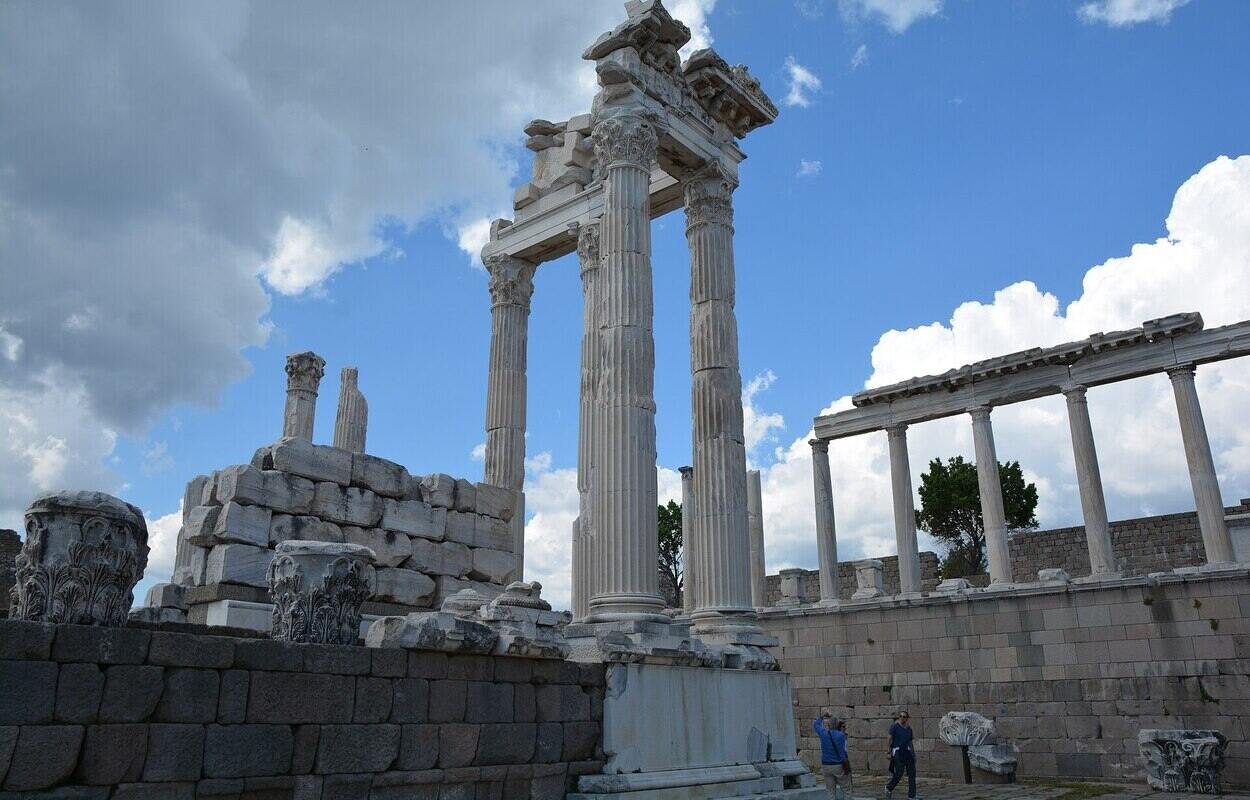
The Temple of Trajan occupies one of the Acropolis’s most prominent terraces.
Although only the surviving remains can be seen today, the monument helps visitors understand the scale and importance of Roman architectural intervention in Pergamon.
The elevated location also makes this one of the best areas for appreciating the relationship between the ancient city and the surrounding plain.
4. 📚 Learn About the Ancient Library
Pergamon’s library is one of the city’s most famous historical associations.
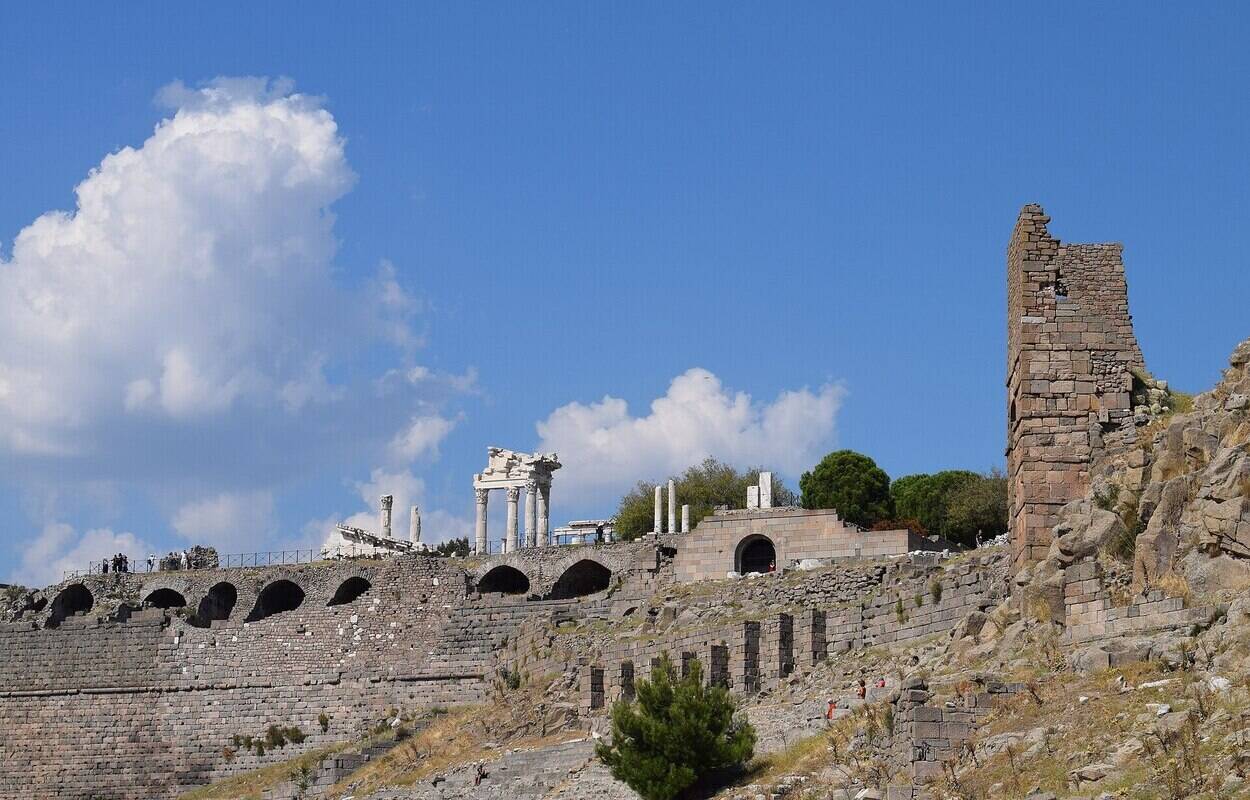
The library represented the intellectual ambitions of the Attalid rulers and formed part of Pergamon’s reputation as a centre of learning. The city’s intellectual rivalry with other Hellenistic centres helped establish Pergamon as a major cultural power.
For modern visitors, the important point is not to expect a complete surviving library building. Instead, imagine the Acropolis as an intellectual and cultural capital where literature, philosophy, science and art were actively cultivated.
5. 🩺 Visit the Asclepion
The Asclepion of Pergamon is one of the most important Roman-era attractions in the area.
Dedicated to Asclepius, the ancient god associated with medicine and healing, the sanctuary developed into a famous centre of therapeutic practice.
The complex demonstrates that ancient medicine was not separated from religion, ritual, architecture and natural environments in the way modern healthcare is.
Visitors can explore the remains of the sanctuary and consider how patients might have experienced the complex as both a religious and therapeutic environment.
UNESCO identifies the Asclepion as one of the major components of Pergamon’s Roman heritage and notes its continuing association with healing.
6. 🧱 Visit the Red Basilica
The Red Basilica, also known as the Serapeum, is another essential stop in Bergama.
The monumental structure illustrates the cultural and religious transformation of Pergamon across different historical periods.
Originally associated with Roman religious traditions, the complex was subsequently adapted and reused. Its later history reflects the layered nature of the city, where religious and architectural functions changed as new communities and traditions became dominant.
This makes the Red Basilica particularly valuable for travelers interested in architectural history rather than simply ancient Greek ruins.
7. 🚶 Walk Through Historic Bergama
After visiting the archaeological sites, spend time in modern Bergama.
Walk through the older neighbourhoods, look for Ottoman-era architecture, explore local streets and observe how modern life continues around ancient monuments.
This slower approach gives you a better understanding of why UNESCO describes Pergamon as a multi-layered cultural landscape rather than a single archaeological ruin.
8. 🕌 Explore Ottoman Heritage
Bergama’s Ottoman heritage includes mosques, traditional urban structures, commercial areas, baths and other historic elements.
The Ottoman city developed over earlier layers, meaning that a walk through Bergama can reveal several centuries of history within a relatively compact area.
9. 🌄 Enjoy the Landscape
Do not spend your entire visit looking down at archaeological remains.
Pergamon was deliberately positioned above the Bakırçay Plain, and the views are an important part of the experience. From the Acropolis, the relationship between the ancient city, surrounding hills and agricultural plain becomes immediately apparent.
🌤️ Best Time to Visit Pergamon
The best time to visit Pergamon is generally spring or autumn.
🌸 Spring
Spring offers pleasant conditions for walking through the archaeological sites. The surrounding landscape can also be particularly attractive during this period.
☀️ Summer
Summer can be hot, especially when walking across exposed archaeological areas. If you visit during the summer, start early in the morning whenever possible.
Carry sun protection, wear comfortable shoes and plan enough time for shade and rest.
🍂 Autumn
Autumn is another excellent season for archaeological exploration. Temperatures are generally more comfortable than during the peak summer period, making it easier to combine the Acropolis, Asclepion and town centre in one day.
❄️ Winter
Winter can be quieter and attractive for travelers who prefer fewer visitors. However, weather conditions can change quickly, so check current site information before travelling.
⭐ Best Overall Choice: For a comfortable sightseeing experience, choose a spring or autumn day and begin with the Acropolis in the morning.
🚗 How to Get to Pergamon
✈️ From İzmir
Bergama is located in İzmir Province and is accessible by road from İzmir. For international visitors arriving at İzmir Adnan Menderes Airport, the practical approach is to continue toward Bergama by road.
🚗 By Car
A rental car is one of the most convenient choices if you want to combine Pergamon with other destinations along the Aegean coast.
Driving also gives you greater flexibility to visit the Acropolis, Asclepion, Red Basilica and surrounding attractions without depending entirely on local transport schedules.
🚌 By Bus
Intercity and regional bus connections can be used to reach Bergama from major towns in western Türkiye. From Bergama’s central area, local transportation or taxis can be used to reach individual attractions.
🚕 Getting Around Bergama
The attractions are spread across different parts of the historic landscape, so do not assume that every major monument is immediately beside the Acropolis.
A sensible itinerary is to visit the Acropolis first, continue to the Asclepion, then return toward the town centre for the Red Basilica and Ottoman heritage.
🏨 Where to Stay in Bergama
Staying overnight in Bergama is worth considering if you want to explore the area without rushing.
🏙️ Stay in Central Bergama
The town centre is the best choice for travelers who want easy access to restaurants, local shops, historic streets and the atmosphere of modern Bergama.
🏛️ Stay Near the Historic Area
Accommodation close to the historic centre can be convenient for travelers who want to explore the town on foot, particularly in the morning or evening when archaeological sites are closed.
🌊 Combine Pergamon with the Aegean Coast
Pergamon can also be incorporated into a wider Aegean itinerary. Travelers visiting İzmir, Ayvalık, Foça, Dikili or other nearby destinations can consider Bergama as a historical stop along their route.
💡 Accommodation Tip: If your main objective is archaeology, staying in Bergama can be more convenient than making a rushed day trip from a distant coastal resort.
🗺️ Pergamon Map and Layout
Pergamon is easier to understand when you think of it as several connected historical zones rather than a single archaeological entrance.
- ⛰️ Acropolis: The monumental Hellenistic and Roman centre on Kale Hill.
- 🩺 Asclepion: The major Roman-era healing sanctuary.
- 🧱 Red Basilica: A monumental religious complex within modern Bergama.
- 🏘️ Historic Bergama: Ottoman and later urban layers.
- 🌾 Bakırçay Plain: The landscape dominated by the ancient Acropolis.
The UNESCO property includes archaeological areas, urban heritage, religious structures, water systems, burial mounds and the wider cultural landscape. This broad geographical context is essential to understanding why Pergamon received World Heritage status.
📍 Suggested Map Route
Acropolis → Asclepion → Red Basilica → Historic Bergama → Ottoman Heritage
⏱️ How Long Should You Spend in Pergamon?
One full day is a good minimum for travelers who want to see the principal attractions without rushing.
🕐 Half-Day Itinerary
- Acropolis
- Ancient Theatre
- Temple of Trajan
- Quick visit to central Bergama
🕘 One-Day Itinerary
- Morning: Acropolis
- Late morning: Asclepion
- Afternoon: Red Basilica
- Late afternoon: Historic Bergama
- Evening: Local dinner and overnight stay
🗓️ Two-Day Itinerary
Two days allow a considerably slower experience. You can explore the archaeological sites in greater detail, spend more time in historic Bergama and use the second day to discover surrounding attractions.
🍽️ What to Eat in Bergama
A visit to Pergamon should include time for local food.
Bergama belongs to the broader Aegean culinary environment, where olive oil, vegetables, herbs, grains and grilled dishes are important components of local cuisine.
Look for regional specialties and traditional Turkish dishes in local restaurants rather than treating the town solely as an archaeological stop.
🥘 What to Try
- Traditional Turkish breakfast
- Aegean-style olive-oil dishes
- Seasonal vegetables
- Grilled meat dishes
- Local pastries
- Turkish coffee or tea
📸 Photography Guide to Pergamon
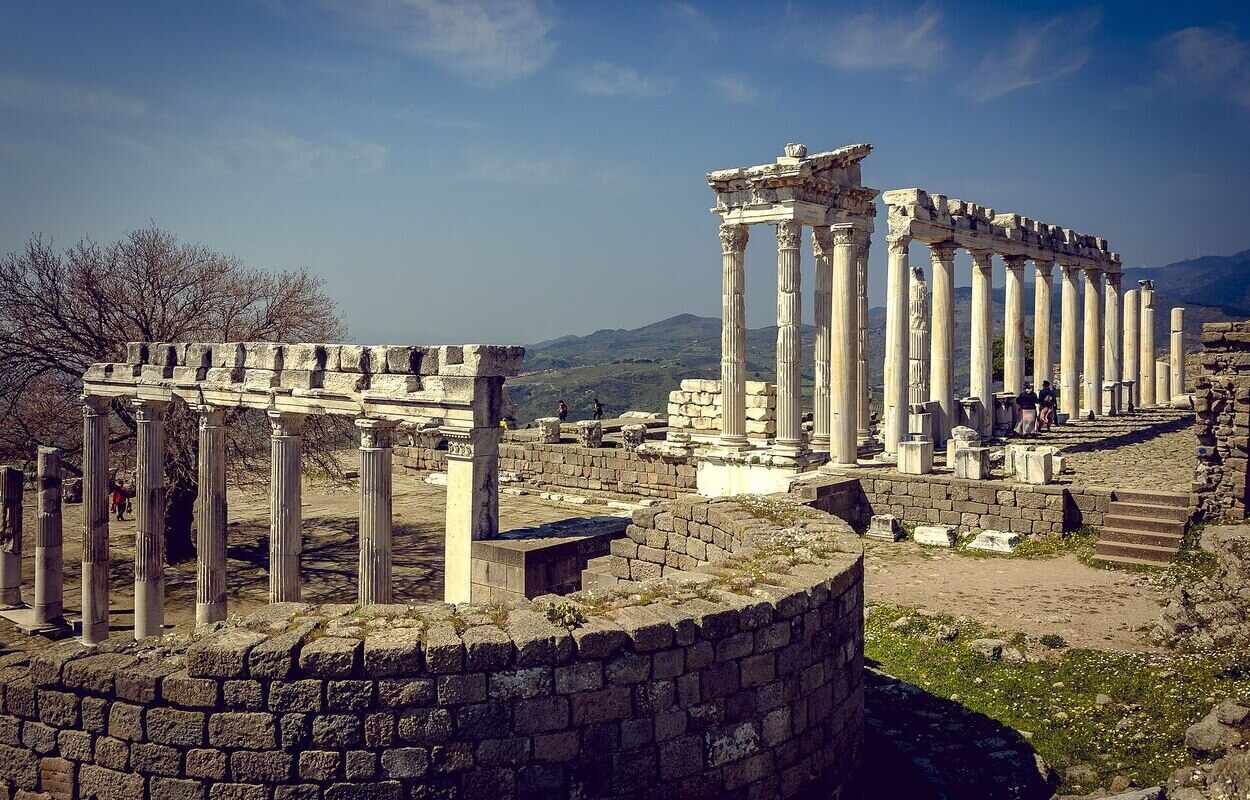
Pergamon offers unusually strong photography opportunities because the archaeological remains occupy a dramatic hillside.
📷 Best Subjects
- The steep ancient theatre
- The Temple of Trajan
- Panoramic views from the Acropolis
- Ancient terraces and columns
- Red Basilica
- Historic Ottoman streets
- Bakırçay Plain
For the best results, photograph the Acropolis early in the day or later in the afternoon when the light creates stronger shadows across the stone architecture.
🎒 Practical Travel Tips
👟 Wear Comfortable Shoes
Pergamon involves walking over uneven archaeological surfaces and sloping terrain. Comfortable shoes are essential.
💧 Carry Water
Some areas of the archaeological site are exposed to the sun and may have limited shade.
🧢 Protect Yourself from the Sun
During warmer months, a hat, sunscreen and lightweight clothing can make a significant difference.
📱 Check Official Information Before Visiting
Opening hours, ticket arrangements, transportation and access conditions can change seasonally. Always check official information shortly before your trip.
🎟️ Allow Enough Time
The biggest mistake is treating Pergamon as a quick photo stop. The site’s value lies in its scale and historical layers.
❓ Pergamon FAQ
What is Pergamon famous for?
Pergamon is famous for its Hellenistic Acropolis, dramatic ancient theatre, Temple of Trajan, ancient library, Asclepion healing sanctuary, Red Basilica and multi-layered cultural heritage.
Is Pergamon a UNESCO World Heritage Site?
Yes. Pergamon and its Multi-Layered Cultural Landscape was inscribed on the UNESCO World Heritage List in 2014. The property includes Hellenistic, Roman, Byzantine and Ottoman heritage.
Where is ancient Pergamon located?
Ancient Pergamon is located around modern Bergama in İzmir Province, in the Aegean Region of Türkiye.
How far is Pergamon from İzmir?
Pergamon is located north of İzmir and can be reached by road. Exact travel time depends on the starting point, traffic and transportation method.
Is Pergamon worth visiting?
Yes. Pergamon is particularly worthwhile for travelers interested in archaeology, ancient history, architecture, medicine, religion and cultural landscapes.
How long do I need in Pergamon?
A full day is recommended for the major sites. A half-day can cover the highlights, but it will feel rushed if you want to see both the Acropolis and Asclepion properly.
What are the main attractions in Pergamon?
The main attractions include the Acropolis, Ancient Theatre, Temple of Trajan, remains associated with the ancient library, Asclepion, Red Basilica and historic Bergama.
What was Pergamon’s role in ancient medicine?
Pergamon became famous for the Asclepion, a major sanctuary associated with healing. The physician Galen was also trained in Pergamon, strengthening the city’s historical association with medicine.
Was Pergamon part of the Roman Empire?
Yes. After the Attalid kingdom passed to Rome, Pergamon became an important Roman city and later developed into a major centre in the Roman province of Asia.
Why is Pergamon called a multi-layered cultural landscape?
Because the modern landscape preserves evidence from several major historical periods, including Hellenistic, Roman, Byzantine and Ottoman civilizations. Later communities reused and transformed earlier structures and urban spaces.
Can Pergamon be visited as a day trip?
Yes. Pergamon can be visited as a day trip, particularly from İzmir or nearby Aegean destinations. However, travelers interested in archaeology may prefer to stay overnight in Bergama.
🧭 Suggested Pergamon Travel Itinerary
🌅 Morning
Start at the Acropolis. Explore the theatre, Temple of Trajan, terraces, ancient public areas and panoramic viewpoints.
☀️ Midday
Take a break in Bergama and have lunch before continuing to the lower archaeological areas.
🏛️ Afternoon
Visit the Asclepion and explore the remains of the ancient healing centre.
🌇 Late Afternoon
Return toward central Bergama and visit the Red Basilica and surrounding historic streets.
🌙 Evening
Enjoy a traditional meal and, if possible, stay overnight to experience Bergama beyond the archaeological sites.
🏛️ Pergamon vs. Other Ancient Cities in Türkiye
Pergamon occupies a distinctive position among Türkiye’s ancient cities.
Ephesus is famous for its exceptionally extensive Roman urban remains and monumental streets. Hierapolis is closely associated with its Roman monuments and nearby Pamukkale. Troy is famous for its legendary and archaeological significance. Pergamon, however, stands out because its importance extends across multiple periods and because the ancient city is dramatically integrated into a steep natural landscape.
The combination of Hellenistic urban planning, Roman medicine, Byzantine religious heritage and Ottoman urban continuity makes Pergamon particularly valuable for travelers interested in historical change over long periods.
🌍 Why Pergamon Deserves a Place on Your Türkiye Itinerary
Pergamon is not simply another ancient ruin.
It is a place where the development of political power, architecture, science, medicine, religion and urban life can be observed across more than two millennia.
The Acropolis demonstrates the ambition of the Hellenistic Attalid rulers. The Roman monuments show how the city was adapted to a new imperial environment. The Asclepion provides a window into ancient approaches to medicine and healing. The Red Basilica demonstrates religious and architectural transformation. Historic Bergama adds the Ottoman layer and shows that the story of Pergamon did not end with antiquity.
UNESCO’s recognition reflects precisely this exceptional continuity and interaction between civilizations. The World Heritage property contains not only monumental ruins but also archaeological landscapes, water systems, burial mounds, religious sites and historic urban areas.
For travelers who want to understand how civilizations build, adapt, reuse and transform cities, Pergamon is one of the most rewarding destinations in western Türkiye.
✨ Final Thoughts
Pergamon Travel Guide should ultimately be approached as an invitation to slow down.
Stand inside the ancient theatre and look across the valley. Walk through the remains of the Acropolis and imagine the city when its temples, stoas and public buildings were complete. Visit the Asclepion and consider the connection between medicine, religion and society in the ancient world. Then return to modern Bergama and walk through streets shaped by centuries of continued settlement.
That contrast is the real attraction.
Pergamon connects the ancient and modern worlds in a way few archaeological destinations can. Its Hellenistic foundations, Roman expansion, Byzantine transformation and Ottoman heritage form a continuous cultural story rather than a collection of disconnected ruins.
If your Türkiye itinerary includes İzmir or the northern Aegean, Bergama deserves serious consideration. Give it at least one full day, wear comfortable shoes, explore beyond the Acropolis and take time to understand the landscape.
That is when Pergamon stops being simply an archaeological site and becomes what UNESCO recognizes it as: a remarkable multi-layered cultural landscape.
📌 Recommended Next Read: Explore more ancient cities, UNESCO World Heritage Sites and historical destinations across Türkiye with Go Explore Turkey.